Wednesday, 8 September 2010

Mad Men Exhibit G – The Suitcase

Scene of crime: AMC (US)

Defendant: Matthew Weiner

Case for the defence:

As the SCDP team gets ready to watch Muhammad Ali defend his heavyweight title against Sonny Liston, Don wants to have a finished idea for Samsonite, even if it means working late into the night. And morning. It's also Peggy's 26th birthday and she's expecting a romantic dinner for two with her boyfriend Mark, but her plans are dashed not just by Don's insistence that she stay late to finish the Samsonite pitch, but Mark has also decided to throw an (unwanted) surprise for her by inviting her family to the meal.

Don invites Peggy to get close in the only non-sexual way he knows how – through drink. It's certainly not through overt displays of respect, although he does let her into secrets and tales of his life no one else at the office knows. Peggy herself reveals some secrets when a drunk, smitten (and recently fired) Duck Phillips turns up at SCDP and confesses his love of her to Don – before beating his former creative director to the ground.

By the time a new day breaks, Don has broken down over the death (and ghostly vision) of Anna but has come up with a pitch for Samsonite. He's also found out some of Roger's secrets through finding his tape of his memoirs – Bert Cooper is a eunuch and Don's secretary Miss Blankenship is revealed to be a "queen of the perversions", one the young Roger embraced warmly.


Witness statements:

"The Suitcase breaks format by turning, for most of its runtime, into what's essentially a short play about two characters. It blends a surprisingly large number of elements into its plot stew, but it uses all of them in service to a story about Peggy and Don, what the two want from each other and what they actually mean to each other. Look at all of the stuff that Mad Men drops into the pot in the first ten minutes of the episode. Peggy and her team have been struggling to come up with a pitch for Samsonite luggage, which has led to Don being perhaps unnecessarily cruel to his star pupil." - Todd VanDerWerff, The AV Club

"It was hard not to ponder Don and Peg ending this night – which included her and her boyfriend breaking up on the phone – in bed together. Certainly, that's how it would have played out on some shows. But whether that ever happens (and it certainly doesn't feel impossible at this point), it doesn't need to, because this episode solidified a special bond between Don and Peggy – which included the less than glamorous moments of her seeing him puking his guts out in the bathroom and the sweetness of her letting him fall asleep with his head in her lap." - Eric Goldman, IGN TV

Findings:

I've summarily executed some shows for their use of shimmering, happy ghosts. So why haven't I done this on this episode, did Weiner get lucky? Get this into your heads creeps, no one is ever lucky against a Judge, we're just gathering more evidence.

Was it because this was a strong episode? In some cases, no, this was an episode that seemed to have been written in parts by the audience as character said things that citizens have been shouting for some time – "Peggy, tell Don he doesn't give you credit", "Peggy, tell Don he's a drunk and pushing too hard", "Don, admit that Miss Blankenship is a penance". We Judges don't listen to the people – look how the democracy experiment worked out – and when writers do this it can be the beginning of the end. However, on review of other seventh episodes from Mad Men, the self-contained, tight plot worked and is typical of the series.

Even though it had a soap opera feel – I've lost count of the jaws broken when programmes take a turn for that – and a bit too much humour – Duck trying to violate Public Ordinance H-267/b (*Tharg note: 'Citizens must not outrage the public decency, viz, defecating and urinating in public') - it ultimately came out strong.

In terms of themes, there was a touch of the Three Living and Three Dead in The Suitcase. Duck, whose career died, Anna, who has died, and Miss Blankenship, whose potential for new life (*Tharg note – no longer sexual) all remind Don what the future holds in store. There is also the matter of the tape, Don must be aware of Ordinance J-659/j requiring all relevant information to be handed in to the Judges. Instead he told Peggy. I've also learned that discoveries and revelations should only work against the protagonist, so if this is foreshadowing of Don's life being discovered – again, after Pete and Peggy's discoveries – by others then so be it.

Verdict & sentence:

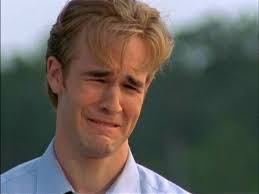
John Hamm gets a reward for the most convincing cry in television. Certain other perps currently undergoing rehabilitation in the cubes should take note. There were some Justice-approved call backs, such as the reference to the first episode when Peggy uncomfortably takes Draper's hand – in this case he takes hers.

For an atypical episode, I am waiving the automatic fines for use of ghosts and soap opera plotlines. Only the strongest who know the rules know how to bend them. Like Muhammed Ali. Or a Judge.

Draper – a word of warning. I admire your commitment to the job, but you could have come up with that Samsonite image if you waited to the morning and bought a paper.

Bioshock 2

Scene of crime: Xbox 360/PS3/PC

Defendant: 2K Games

Case for the defence:

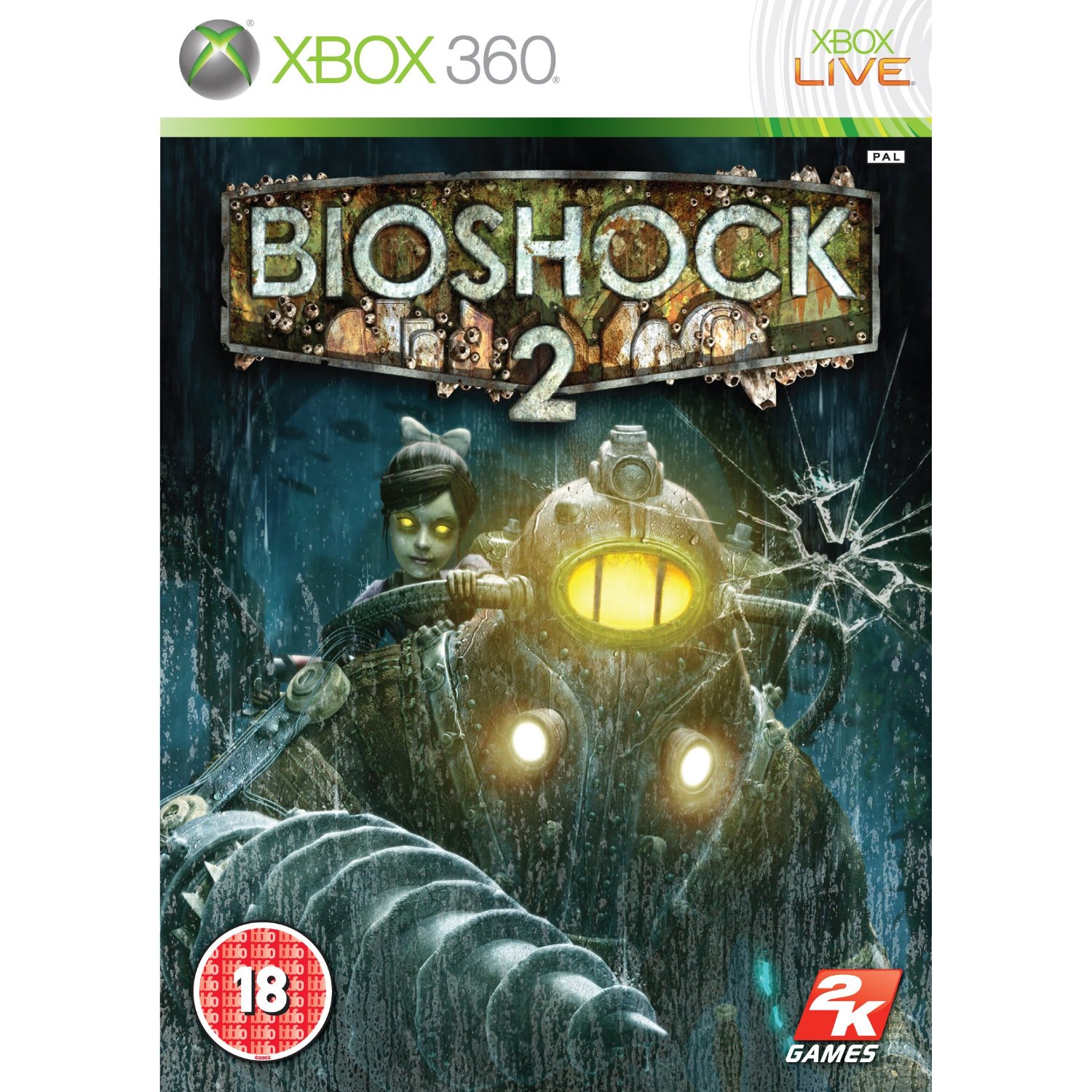
Eight years after the events of the first game and Rapture is just as deadly a place to visit. Jack Ryan from the first Bioshock is gone, now you are one of the giants – and instantly recognisable image of the game – a Big Daddy. Formerly the only man to have discovered Rapture by himself, as Subject Delta you are a unique Big Daddy, the first to successfully bond with a Little Sister.

That Little Sister – the small girls who harvest ADAM, a genetic-altering material that powers your Plasmid superpowers – happened to be Eleanor Lamb, daughter of Dr Sophia Lamb and the ruler of underwater dystopia Rapture since the fall of Andrew Ryan. Gone is Ryan's devotion to the individual and Ayn Rand, in is the community and Family of Dr Lamb.

While Ryan may be gone, but the Splicers – insane, genetically enhanced, humans – haven't. They've evolved, as have Big Daddies, who have had weapons and other upgrades, making Rapture a tougher place than the first visit, although hacking into machines is easier.

The story itself starts in 1958 with your suicide under hypnosis, only for you to reawaken a decade later in Rapture to hunt for Eleanor and to put a stop to Dr Lamb kidnapping girls from the mainland to become new little sisters.


Witness statements:


"BioShock is a hard act to follow, but this sequel is definitely a worthy successor to what is regarded as one of the decade's best, smartest games. In a lot of ways it's even better than its predecessor. It's a more competent shooter, with vastly improved AI and a more varied palette of weapons and Plasmids. The story is tighter and more focused, offering a number of challenging moral junction points, and the options for tactical play are much broader." - Andrew Kelly, PSM3

"One thing BioShock 2 does brilliantly where the original game floundered is in creating a feeling of progression and consequence to your actions. BioShock 2 constantly chucks moral decisions at you (and not just whether you should off the Little Sisters or not) and through character dialogue and the odd painful flashback it's clear what kind of path your character is treading; good, bad or somewhere in the middle, ultimately culminating in one of many different endings.

This result is a single-player game that, on paper at least, is superior to its 2007 predecessor - in level design, pacing and combat. The one thing it doesn't do though - just as we expected - is recreate those 'wow' moments from our first title's trip underwater." – Andy Robinson, Computer and Videogames

Findings:

A good story suspends belief. That's what they taught us at the Academy and if there's a case file for this, it's the original Bioshock. There those creeps at 2K they came up with a 1950s world of genetically modified humans with superpowers that was believable, and you learnt how they did this not through cut scenes and dialogue but through revelation and self-discovery at key points. I liked that, it got a Justice Department Seal of Approval and we gave permission for a sequel.

The first Bioshock (and Halo for that matter)  had a strong story and you know what else it had – a strong theme, it was about survival, it had a pinch to make you more involved, and a twist to make the story even more dramatic. This then set up a big, final confrontation that didn't disappoint and rought back memories of my days as a street judge. Some of my fellow Judges knocked it for slipping in an escort mission but in terms of storytelling my Scriptomatic Gauge hit full and the writers got a reward.

Bioshock 2, on the other hand, while not a bad story, lacks these key points. Despite knowing them for Bioshock 1, the sequel has no pinch or a dramatic showdown. Most worryingly, by the final parts of the game you can kick back and go off duty - you can have an inactive protagonist. They do this by encouraging you to use this to summon an invincible super soldier type to fight for you. I am a Judge, we don't let vigilantes and citizens do our fighting nor should we in training simulators like Bioshock 2.

Finally, the plot is confusing and I had to refer to notes from other investigating Judges to work out what was happening in terms of the story and by the end I did not care all that much.

I know, what was the story to Zelda, Mario or Great Giana Sisters? Not that much, but things have changed. Bioshock is partly sold on the strength of its story, as seen in Andrew Robinson's witness statement. It still gets things right – the antagonist is someone who believes they are acting for the best of intentions, a type I find tougher to battle than a simple 'a mad criminal'. Likewise Rapture is a dystopia but as Isaac Asimov once said, a dystopia that has the single note of 'aren't things bad' gets staler than a synthi-donut pretty quickly. In addition, the Ryan theme park adds a touch of dark humour to anyone who's been on a Disney ride.

It doesn't disappoint but it doesn't live up to the first game.

Verdict & sentence:

2K Games, you have not done badly. But on the other hand you're not completely innocent of crimes. And don't give me the "sequels aren't equals" crap – take a look at Grand Theft Auto and Call of Duty.

However, your crimes did not stop enjoyment of the game, but are crimes nevertheless and must be punished. The most suitable punishment in your case is a fine – a million creds. Case dismissed.

Wednesday, 1 September 2010

Mad Men Exhibit F – Waldorf Stories

Scene of crime: AMC (US)

Defendant: Writers Brett Johnson and Matthew Weiner

Case for the defence:

It's awards time and SCDP is up for the advertising industry's Clio – and Peggy claims it's for her idea yet Don gets the credit. Instead of thanking her – and gratitude is something Don's bad at as we later see - he scolds her and makes her work the weekend with a 'lazy and ideas free' sexist art director who waxes lyrical about the joys of nudism.

Some old faces appear at the Clios – self-styled rival Tom, Duck Philips, sailing on neat gin with an embarrassing drunken interruption to the ceremony, and Ken Cosgrove whose client suggests will be working with SCDP very soon. This sets Pete on edge, petulantly asking Lane if a merger was ahead – there isn't, but worse for Pete, Ken may be joining. Pete never liked Ken and his 'easy success', so there's no way Pete wants him there. However, just because he doesn't want it doesn't mean it may not be best for SCDP.

Recruitment and getting into ad land runs through this episode. Getting that break– we see a flashback to how Roger gave Don a job (or did he? Drink was involved) while in the present one of Roger's wife's cousins is trying to land a job. All he has are hack lines and a tenuous connection to Roger.

The other major theme in this episode is that of drink, and saving face the morning (or two mornings) after. Don stole the cousin's pitch, Roger gave Don a job when told that he had said so while drunk.

It's an office-life focused episode, and all the stronger because of it.


Witness statements:

"This week’s episode of Mad Men gives the idiom an origin story while providing illustrations of how careers get made as much through hard work and persistence as raw talent. And how people who don’t remember that could lose what they’ve got. Aspiration may not be as good as perspiration, but either one beats coasting." - Keith Phipps, The AV Club

"I don’t know what to do with the information that Roger hired Don to come work at Sterling Cooper because he was drunk at lunch one day and Don was being a pest. What did this shed light on? Roger’s lucky that Don turned out to be a spectacular creative genius? Both of the men have drinking problems? Don didn’t really work his way into anything, he just knows how to work a drunk man? His line about wanting to become a big manly man working in a manly man’s office was adorable, though. Hamm laid on the good-boy charm thick, and that part I enjoyed. Mad Men: Flashbacks are not for you." - Michelle Stark, The Daily Loaf

"Lane, Peggy and Pete - and soon Ken - represent the new order, and they'd be very at home in 2010. They're (mostly) moralistic and bottom-line-oriented, unattractive qualities in anyone. Peggy, exiled to develop a Vick's campaign with sexist-cliche-spouting art director Stan Rizzo, calls his sexist bluff by daring him to strip as she does. It's kind of a stupid scene, actually, and we won't dwell on it." – Kyrie, The Houston Chronicle

Findings:

Drink does strange things and that's why we banned it in Mega City. Mad Men reminds us all why – Don used it to weasel the job that launched his career and it's to blame for him hiring a man he clearly doesn't want. It's also the reason he lets down his kids for the first time, and for making a fool of himself with Dr Faye. Washed up Duck Philips is a warning of where he could end up and some good foreshadowing of mixing drink with work. It also made me realise that for all the drinking done on Mad Men, we rarely see the consequences, other than with Freddy Rumsen. Other than a long stretch in the isolation cubes of course.

The acting rated highly on my Acting Detector – Don played three versions of himself, as literally wide-eyed (a little too wide-eyed if you ask me) 50s go-getter, stern creative director, and drunk. We saw Joan in love with Roger and as an old friend. Peggy got naked, but as a Judge I'm not surprised but what citizens get up to. It's Pete who I have under surveillance as it is hard to tell how he'll react and that makes him dangerous. If he was under my jurisdiction I would have hauled him in for analysis and perhaps a protective lobotomy to keep him on track.

Don Draper also needs some protection for his own good, a spell in the isolation cubes would do him a service. I don't approve of a man who livers on a false identity as it's a crime, but he has at least been consistent so far. That he told a waitress – and not up to his usual standard going by Hot-or-Not gauge – his name's Dick is major flaw. If he was a Wally Squad member (*Tharg note – undercover Judge) he would have been dead long ago.

Drink lets people get you over a barrel – Don had Roger, cousin Danny had Don. Peggy got the art director over a barrel by calling his bluff but at least no drink was involved there. And Peggy was the only one without regrets because of this.

Don kissed Joan and I hope this doesn't lead to a new affair and more regrets. My instinct is nothing will come in Don's current shape, as a washed up exec at his nadir, but he's not at Duck Phillip levels just yet. There is still more evidence to consider.

Verdict & sentence:

Performances varied in portrayal but not in the acting and despite what Witness Kyrie claims, flashbacks do work well in Mad Men, and work better on this programme than on any other.

Dr Faye and Joan to remain observation, Pete to be brought in for interrogation.

Brett Johnson and Matthew Weiner, you are acquitted.

Thursday, 26 August 2010

Mad Men Series 4 - Exhibit E – The Chrysanthemum and the Sword

Scene of crime: AMC (US)

Defendant: Writer Erin Levy

Case for the defence:

First the Brits now members of another former empire make their appearance in Mad Men, clichés and all – the Japanese. Honda executives are considering switching agencies and Sterling Cooper Draper Pryce are, along with two other medium-sized firms, invited to compete via a presentation with strict rules.

Self-proclaimed rival Ted Chaough wants to beat Don, even if he is infuriated by the worship of Don, but his obsession leads to the (probable) bankrupting of his agency as Don resurrects a trick from the very first season of Mad Men. Back then it was what was to make Lucky Strike different when manufacturers were all in the same boat, now it was how to think differently when the other agencies had the same financial limitations.

Back to Don's personal life and we see more of him looking after the kids – in practice leaving them with a babysitter to go on a date, with the definite notion he could have gone at any time. Daughter Sally starts to rebel by cutting her hair and masturbating at a sleepover, leading to Betty slapping her in front of Don.

However, there were more than a few touches of humour to compensate, with Don's secretary Miss Blankenship fighting Pete for a present, the subtitles for what the translator told the Japanese and Peggy riding a motorbike around in circles in an empty film studio.


Witness statements:

"In general, much of the first half of Sword pushed a little too hard at the thin line that separates Mad Men from cliched tales of the '60s. The series has mostly avoided cliche in the past because it was set in a period of the '60s that was relatively unexploited...The best thing about Mad Men's second and third seasons were their restraint, their ability to back away from the sorts of 'Hey, remember when kids used to play with plastic bags?' moments that occasionally hurt season one episodes. Season four, though it's fun and feisty, suffers from a bad case of the subtext on sleeve from time to time." - Todd VanDerWerff, the AV Club

"What is the right behaviour? How does it define us? That seemed to be at the crux of another superb episode of Mad Men, which has so far defied those who might be looking for a crack in the veneer of its greatness now that Season 4 is upon us. No such luck just yet." - The Spoiled Bastard, the San Francisco Chronicle

Findings:

What to make of this episode, the first to make me rub my chin in judgment. Don Draper has finally returned to his old, creative ways while we saw more of Henry Francis and his relationship with Betty and Don. Pete Campbell was both a brat and a wise old man, something the best episodes show him as, while Joan is once more a figure of competence.

However, Mad Men tried to get funny with a Judge. And Judges don't do humour, not at Sterling Cooper Draper Pryce. We're taught at the Academy of Justice that a good character is somewhere between real life and a cartoon, and Miss Blankenship belongs in Toon Town. In moderation I can handle her, but if I see her acting like she did again I'll throw her in the cubes for her own good. Mad Men can do humour well – as when the translator said, regarding the Japanese business men leering at Joan's breasts, that "they're not subtle" – but Don's secretary and Roger's attempts at racist humour was too much. That's on the charge sheet.

In mitigation, Pete Campbell did show both sides that make you both like him and want to strike him with a riot stick. Betty Draper, who has been stuck in the same key, added a note or two, and Sally showed signs of development. I've seen muties eat a man whole, but I still felt uncomfortable at her masturbation scene. But it was also relevant to the plot and to revelation as Don was the only person Betty could speak frankly to.

I enjoyed this episode, but that's not how Judges make their calls. Introducing a nemesis for Don and disposing of him in one episode is not typical of Mad Men, although they did make it believable as to why they never mentioned Ted before. Similarly Roger's anti-Japanese feelings have never been hinted at for all of Bert Cooper's Nipponophilia. I think this sums up the episode – not typical Mad Men, but it just about pulls it off.

Verdict & sentence:

I'm still rubbing my chin on this one. I think I need to make an example of Erin. Erin Levy, I sentence you to community service cleaning the windows inside and out on the 250th floor of the housing blocks. You have leave to appeal. Take this flak jacket, some of those birds have taken a liking to human flesh, but it should protect most of your most vulnerable parts. Hearing adjourned.

Thursday, 19 August 2010

Confession 20100819 - The Making of Mr Hai's daughter: Becoming British

Scene of crime: Book, Virago Press

Defendants: Yasmin Hai, author

Case for the defence:

The Mr Hai of the title arrived in Britain from Pakistan half a century ago to found a new life in London based on his view of Englishness. After importing a bride from his homeland, he eventually settled in Wembley and raised his family, including Yasmin.

Mr Hai – Marxist, atheist Muslim, Englishman – dominates the book, even after his death. He is the motif for the book – a question of identity and identity politics – as well as a clearly adored father and man of strong views. Amongst the prominent ones were 'no Urdu' in the house, to help his family assimilate, and no Islam, apart from Eid which he saw as religious as Christmas.

Later on, as Yasmin breaks out into the world and her widowed mother gains independence, Yasmin becomes a TV presenter and journalist and a default 'go to' Muslim journalist. The only problem is that Yasmin doesn't count herself as Muslim, and as her friends become more fundamental in their beliefs, is told more often that she isn't 'proper' Muslim. She in turns wonders if they are proper British, and what she is, proper or otherwise.


Witness statements:

"Had Mr Hai succeeded in turning his daughter into an Englishwoman? I’m not sure it really matters any more, but his kindly influence obviously enabled his little Yasmin to write this unbelievably funny, passionate autobiography." - Zenga Longmore, The Spectator

"Ultimately, this is a very compelling story and there are a whole bunch of interesting issues which I hope to touch upon in the future. In many ways, it epitomises Pickled Politics. I don’t think I can give the book a better recommendation than that and encourage everyone to check it out." - Shariq, Pickled Politics

"When Yasmin Hai's Pakistani father arrived in Britain in 1964 he determined to embrace Britishness, and to raise proper little English children. In her happy - if confused - childhood in the London suburbs, Hai was drilled in English manners, had her hair cut in the style of Milly Molly Mandy, and excelled at tiddlywinks. Now a successful TV journalist, she writes winningly and with great humour of the conflicts and realities of a cross-cultural life, and of her own struggle to navigate between her disparate identities in modern Britain. Charming, funny and illuminating." - The Daily Mail

Findings:

This is the first confession [* Tharg note, 'autobiography' for our 21st century readers] that this Judge has had to consider as a case and as a Judge I'm naturally disinclined to disbelieve anything tells me about their life – guaranteed it'll be a sob story so you'll go easy on them. Never happens, but they try.

I've not come across such an open confession as I read here, one that deals with the good and the bad, the rights and the wrongs. I liked her style and I read her confession quickly. No creep likes thinking back about the bad things done to you and bad things you've done – Grud knows how hard it is when you think how long you need to beat some perps to find out what they did.

However, like many a confession I've heard before, and will no doubt hear again, there were bits missing that I wanted to know more about. Her mother got a job at the BBC – doing what, did it inspire Yasmin? Yasmin married a Jew – what did the family and friends think, what was the wedding like? The early parts of her life are relatively detailed, but by the end she just wants to rush through it. Like I said, I hear this a lot in confessions – when the perp starts rushing, and brushing aside details as 'inconsequential', I know I want to hear more as they have something to hide.

There are times when she needs to say more. You can tell Yasmin has a horror of how her British-born friends become more Islamic and praying to Grud, I mean Allah, but she rarely tackles it head on. She also has an issue as being seen as a token minority for producers, but my research into what remains of the 21st century internet, all her interviews have been about Islamic identity and Britishness. I suspect that this is not her choice and she's a victim of her own success with this confession.

Verdict & sentence:


This confession flows well, but too much is missing and I want to know more, as any good Judge should. Not only that but Yasmin, in obsessing about her own identity fails to address the big question her book raises – can Muslims integrate or not? Her confessions suggests that they won't, a controversial point and I don't know if she realises that this is what she suggests. In the wrong hands much could be made of it.

I like her style, but too much is left out. However, she may yet atone. Yasmin Hai, I sentence you to 3 years in the cubes for lack of thorough thought, suspended for five years as I suspect you will make good a better follow up.

Wednesday, 18 August 2010

Mad Men Series 4 - Exhibit D – The Rejected

Scene of crime: AMC (US)

Defendants: Writers Keith Huff and Matthew Weiner

Case for the defence:

Don's drunken tryst with his secretary, Allison, finally catches up with him after bubbling away the past two episodes, while Pete discovers that he is a (legitimate) father at long last. While the episode starts with Don and Roger placating Lee Garner Jr at Lucky Strike over his concerns that cigarette advertising is on the ropes, the account that is at the centre of this episode is Pond's Face Cream.

Convinced that there's a conflict of interest with Clearasil – which just happens to be the account that Pete's father gave him (and had taken away in the past over Pete's refusal to adopt a kid) – Roger and Lane orders Pete to ditch Clearasil. Back with Pond's, Dr Faye Miller leads the girls from the office – not including 'old and married' Joan – in a discussion on face cream and relationships, which opens the floodgates of tears. When Allison can't take any more and confronts Don about 'that night' – she wants something from him and when he won't open up emotionally, and worse, offering what he thinks she wants (a glowing reference, not a statement of what he thinks of her) - she snaps and hurls a paperweight at him.

Finally, we see more of Peggy this episode, literally in the case of peeping through the glass divider into Don's office. She's hit on by a lesbian in the building but holds her own and isn't put off, enjoying the party until it's raided, making good of her hiding place in a cupboard for a quick kiss with an exciting new writer.


Witness statements:

"The Rejected's version of the Don/Lane bender arrived via Peggy, in truncated but still compelling form... the big scenes in The Rejected were far more pointed—though I confess they still snuck up on me, to the extent that I didn’t feel the full weight of the episode until its final few images." Noel Murray, The AV Club

"I am consistently amazed by what Vince Kartheiser does with Pete, leaving him to seem completely sincere in each and every one of his conflicting characteristics. Pete seemed genuinely excited to be having a child but also genuinely thrilled to be able to exploit his new status as leverage in his dealings with his father-in-law through the agency." Ginia Bellafante, the New York Times  

Findings:

I like themes in an episode. Mad Men in particular does this well as they don't force feed it to you. But by grud, The Rejected, layered it on this week, I almost thought it was a plant. Maybe, and it's not often you hear a Judge admit doubt, Man Men is a male-centric world and series, when it focuses on the women it is more noticeable. Maybe.

There was grud-load lot of rejection it this episode – Don rejected Allison, then she him, Clearasil by Roger before Pete turned the tables ("turned chicken shit into chicken salad") on his father-in-law, and the secretary with her ex-boyfriend. Even Peggy engaged in this, rejecting Joyce's advances and ultimately rejecting her boyfriend by not only not inviting him to the party but kissing another creep while there. Lane almost rejected Pete with his handling of the news he was a father before he corrected himself. As I said, a pretty theme-heavy episode.

This brings me to some evidence an informer, Hack, sent me. While the theme in this episode was overwhelming, the little details stood out, and you don't have to have a Judge's synthetic eye to spot them. Lane's handling of Pete's parenthood – focusing solely on the account, before correcting himself – and Don's shutting out Alison, but she still getting into him and noticing how he only turns on the charm when he wants something, are uncomfortably true to life for some. Even Don's started, but never finished, typed apology, when he could have said these words, are true, so I'm informed. Judges are forbidden by the Justice Dept from marrying or forming relationships, and watching Mad Men makes me see the wisdom of the Father of Justice when he lay down the law of celibacy.

Despite my objections to the defence, this episode was still better written than most other series. The catalyst of Ken Cosgrove – not seen since the end of Season 3, and underused then at any rate – led to action by Pete and was handled deftly. Dr Faye Miller's machinations mean I'll be keeping an eye, or at least a Spy in the Sky, for the near future – her wedding ring removal, change of clothes, even 'being forgotten' for the name tags – all stank of deviousness. Deviousness isn't a crime, much as it ought to be, but sleep soundly citizens, for she shall be under observation.

Verdict & sentence:

Hmmmm, I'm going to take my time on this one. In some respects the plot was a bit heavy handed and I don't like that – upholding the law, call me old fashioned, but I like it heavy - but plots, no. In mitigation the characters were well written and well acted, particularly Pete.

Bring in the next piece of evidence.

Tuesday, 10 August 2010

Mad Men Series 4 - Exhibit C – The Good News

Scene of crime: AMC (US)

Defendants: Writers Jonathan Abrahams and Matthew Weiner

Case for the defence:

1964 ends but Don's philandering doesn't. It's new year's eve but two men don't feel like celebrating – Don Draper and Lane Pryce. Pryce reveals he got a divorce for Christmas and Don returns after learning that his soulmate Anna – the original and only Mrs Draper – is unaware she won't be along for much longer due to bone cancer.

Back in the office, and like two acquaintances stuck in halls during the vacation, get to know each other in the only way Mad Men knows – over drink, and good stuff from the sound of it. A trip to the cinema, dinner, comics and call girls ends with Lane bedding one of the call girls at Don's.

Despite the poignancy of the scenes – two lonely men together only because of their lack of family, the cancer, Lane being an ass to Joan – the episode has its light moments, from Lane's secretary mixing up flowers between Joan and Mrs Pryce, Joan's husband's poor jokes.

Witness statements:

"How fucking great were the scenes with Don and Lane? Both slinking into work on New Year’s, deposited by their newly failed marriages. Their bender was something to behold, especially seeing the buttoned-down Lane come way the hell out of his shell. The movie theatre scene was a highlight." Scott Tobias, The AV Club

"After a fairly uneven second episode, Mad Men is back on track with "The Good News." More's the pity it has to be so sad." William Bradley, The Huffington Post


Findings:

Mad Men, it's been a while. I never sat in judgment on you before but my predecessor on the beat spoke highly of you. I don't know why you keep getting run ins with the Justice Department, I don't know if you like to push your luck but so far its held. Let's hope for your sake it continues.

The first two episodes of this series were reasonable, but seemed to lack something to make them rounded. The Good News is rounded. It would be easy for the writers to have had an episode solely with corny jokes, shots of Joan at her loveliest and drunken high-jinks. Similarly they could have gone with a dark episode, with two divorced men at their loneliest, Draper making a fool of himself, and unknown, deep, cancer.

However, the writers made a wise choice by not taking the easy route but the difficult one of getting the balance right. And it worked, luckily for you perps.

Don Draper, you're making a fool of yourself. But it's a believable foolishness. You also showed some human dignity at last, even if I nearly shot the screen while reviewing the case.

Lane, it's good to hear you speak up at last. Before now it was the Don and Roger show, I'll be monitoring you. You've been warned.

Joan Holloway, I've not forgotten you. Good to see you step to the front for once. You're lucky judges don't approve marriages as your husband would have had a firm 'reject' from me, although he has some qualities shown in this episode, even if you did not believe it.

Verdict & sentence:

It's the fourth series of Mad Men, and the 43rd episode yet you're getting away with this like you're still fresh. I'd suspect that you were on Stookie [Tharg note – an anti-ageing drug. Justice Department note – a highly illegal anti-ageing drug].

Innocent of all crimes.