Wednesday, 18 August 2010

Mad Men Series 4 - Exhibit D – The Rejected

Scene of crime: AMC (US)

Defendants: Writers Keith Huff and Matthew Weiner

Case for the defence:

Don's drunken tryst with his secretary, Allison, finally catches up with him after bubbling away the past two episodes, while Pete discovers that he is a (legitimate) father at long last. While the episode starts with Don and Roger placating Lee Garner Jr at Lucky Strike over his concerns that cigarette advertising is on the ropes, the account that is at the centre of this episode is Pond's Face Cream.

Convinced that there's a conflict of interest with Clearasil – which just happens to be the account that Pete's father gave him (and had taken away in the past over Pete's refusal to adopt a kid) – Roger and Lane orders Pete to ditch Clearasil. Back with Pond's, Dr Faye Miller leads the girls from the office – not including 'old and married' Joan – in a discussion on face cream and relationships, which opens the floodgates of tears. When Allison can't take any more and confronts Don about 'that night' – she wants something from him and when he won't open up emotionally, and worse, offering what he thinks she wants (a glowing reference, not a statement of what he thinks of her) - she snaps and hurls a paperweight at him.

Finally, we see more of Peggy this episode, literally in the case of peeping through the glass divider into Don's office. She's hit on by a lesbian in the building but holds her own and isn't put off, enjoying the party until it's raided, making good of her hiding place in a cupboard for a quick kiss with an exciting new writer.


Witness statements:

"The Rejected's version of the Don/Lane bender arrived via Peggy, in truncated but still compelling form... the big scenes in The Rejected were far more pointed—though I confess they still snuck up on me, to the extent that I didn’t feel the full weight of the episode until its final few images." Noel Murray, The AV Club

"I am consistently amazed by what Vince Kartheiser does with Pete, leaving him to seem completely sincere in each and every one of his conflicting characteristics. Pete seemed genuinely excited to be having a child but also genuinely thrilled to be able to exploit his new status as leverage in his dealings with his father-in-law through the agency." Ginia Bellafante, the New York Times  

Findings:

I like themes in an episode. Mad Men in particular does this well as they don't force feed it to you. But by grud, The Rejected, layered it on this week, I almost thought it was a plant. Maybe, and it's not often you hear a Judge admit doubt, Man Men is a male-centric world and series, when it focuses on the women it is more noticeable. Maybe.

There was grud-load lot of rejection it this episode – Don rejected Allison, then she him, Clearasil by Roger before Pete turned the tables ("turned chicken shit into chicken salad") on his father-in-law, and the secretary with her ex-boyfriend. Even Peggy engaged in this, rejecting Joyce's advances and ultimately rejecting her boyfriend by not only not inviting him to the party but kissing another creep while there. Lane almost rejected Pete with his handling of the news he was a father before he corrected himself. As I said, a pretty theme-heavy episode.

This brings me to some evidence an informer, Hack, sent me. While the theme in this episode was overwhelming, the little details stood out, and you don't have to have a Judge's synthetic eye to spot them. Lane's handling of Pete's parenthood – focusing solely on the account, before correcting himself – and Don's shutting out Alison, but she still getting into him and noticing how he only turns on the charm when he wants something, are uncomfortably true to life for some. Even Don's started, but never finished, typed apology, when he could have said these words, are true, so I'm informed. Judges are forbidden by the Justice Dept from marrying or forming relationships, and watching Mad Men makes me see the wisdom of the Father of Justice when he lay down the law of celibacy.

Despite my objections to the defence, this episode was still better written than most other series. The catalyst of Ken Cosgrove – not seen since the end of Season 3, and underused then at any rate – led to action by Pete and was handled deftly. Dr Faye Miller's machinations mean I'll be keeping an eye, or at least a Spy in the Sky, for the near future – her wedding ring removal, change of clothes, even 'being forgotten' for the name tags – all stank of deviousness. Deviousness isn't a crime, much as it ought to be, but sleep soundly citizens, for she shall be under observation.

Verdict & sentence:

Hmmmm, I'm going to take my time on this one. In some respects the plot was a bit heavy handed and I don't like that – upholding the law, call me old fashioned, but I like it heavy - but plots, no. In mitigation the characters were well written and well acted, particularly Pete.

Bring in the next piece of evidence.

Tuesday, 10 August 2010

Mad Men Series 4 - Exhibit C – The Good News

Scene of crime: AMC (US)

Defendants: Writers Jonathan Abrahams and Matthew Weiner

Case for the defence:

1964 ends but Don's philandering doesn't. It's new year's eve but two men don't feel like celebrating – Don Draper and Lane Pryce. Pryce reveals he got a divorce for Christmas and Don returns after learning that his soulmate Anna – the original and only Mrs Draper – is unaware she won't be along for much longer due to bone cancer.

Back in the office, and like two acquaintances stuck in halls during the vacation, get to know each other in the only way Mad Men knows – over drink, and good stuff from the sound of it. A trip to the cinema, dinner, comics and call girls ends with Lane bedding one of the call girls at Don's.

Despite the poignancy of the scenes – two lonely men together only because of their lack of family, the cancer, Lane being an ass to Joan – the episode has its light moments, from Lane's secretary mixing up flowers between Joan and Mrs Pryce, Joan's husband's poor jokes.

Witness statements:

"How fucking great were the scenes with Don and Lane? Both slinking into work on New Year’s, deposited by their newly failed marriages. Their bender was something to behold, especially seeing the buttoned-down Lane come way the hell out of his shell. The movie theatre scene was a highlight." Scott Tobias, The AV Club

"After a fairly uneven second episode, Mad Men is back on track with "The Good News." More's the pity it has to be so sad." William Bradley, The Huffington Post


Findings:

Mad Men, it's been a while. I never sat in judgment on you before but my predecessor on the beat spoke highly of you. I don't know why you keep getting run ins with the Justice Department, I don't know if you like to push your luck but so far its held. Let's hope for your sake it continues.

The first two episodes of this series were reasonable, but seemed to lack something to make them rounded. The Good News is rounded. It would be easy for the writers to have had an episode solely with corny jokes, shots of Joan at her loveliest and drunken high-jinks. Similarly they could have gone with a dark episode, with two divorced men at their loneliest, Draper making a fool of himself, and unknown, deep, cancer.

However, the writers made a wise choice by not taking the easy route but the difficult one of getting the balance right. And it worked, luckily for you perps.

Don Draper, you're making a fool of yourself. But it's a believable foolishness. You also showed some human dignity at last, even if I nearly shot the screen while reviewing the case.

Lane, it's good to hear you speak up at last. Before now it was the Don and Roger show, I'll be monitoring you. You've been warned.

Joan Holloway, I've not forgotten you. Good to see you step to the front for once. You're lucky judges don't approve marriages as your husband would have had a firm 'reject' from me, although he has some qualities shown in this episode, even if you did not believe it.

Verdict & sentence:

It's the fourth series of Mad Men, and the 43rd episode yet you're getting away with this like you're still fresh. I'd suspect that you were on Stookie [Tharg note – an anti-ageing drug. Justice Department note – a highly illegal anti-ageing drug].

Innocent of all crimes.

Tuesday, 15 June 2010

Kwaidan - Case no. 20100616

Scene of crime: Novel

Defendants:

Patrick Lafcadio Hearn

Case for the defence:

Patrick Lafcadio Hearn collects 14 Japanese folk tales and some essays on insects and butterflies.

Hearn was born in Lefkada (hence his middle name) to an Irish Protestant father and a Greek noblewoman, raised in Dublin, matured as a journalist in the US and at the age of 40 emigrated to Japan. Despite operettas like the Mikado, the Land of the Rising Sun remained in in the shadows of Western minds in 1890 when he moved to Japan, and Hearn's publication of Kwaidan: Stories and Studies of Strange Things just before his death in 1904 helped spread Japanese cultural tales from their land of origin.

Like folk tales from other parts of the world, the collection in Kwaidan varies – some humorous, some dark, and others plain disturbing to modern readers. Of the stories included, the dream of Akinosuke is probably the most famous, if only for Stark Trek: The Next Generation paraphrasing it for one of its best-received episodes. The tales are from across the eras of Japanese history and offer an insight into the culture of the country.

Hearn's collection of essays on insects, by contrast, are personal musings on how Japan and Hearn himself viewed the creatures.


 Witness statements:

"Kwaidan translates from the Japanese as weird tales, which perfectly describes these haunting stories.

This collection of supernatural tales includes a musician called upon to perform for the dead, man-eating goblins, and insects who uncannily mimic human behaviour. A perfect treat for fans of the strange and otherworldly." – Amazon review

Findings:

Folk tales aren't easy on the modern citizen. Many come from a social order alien to them, such as life-long commitments formed on one (comatose) kiss or that if your mother is wicked, being ripped apart by wild animals is fair justice. The Law is strong, but it is never cruel. The Grimm brothers and their cohorts would do well if they had a copy of our noble laws to hand. In fact, perhaps the time will come when it's time to judge them for attempts to instil citizen justice – when did you ever read of a Judge determining the villains' sentence in the end? I may make a formal request to the Cultural Unit that fairy tales are rewritten to improve citizen morality and faith in the Justice System.

Returning to Kwaidan, I was impressed before reading by the fact that Amazon has printed this as a lost book – anything that enhances the knowledge of citizens (and keeps them off the streets violating the Law) gets my vote (if democracy were not illegal). The tales are varied and from various parts and periods of Japan, with a variety of humour and darkness.

Stand-out is Akinosuke for its whimsy and exploration of what it is to be happy as family, while Jikininki and Rokurokubi are good for showcasing Japanese supernatural beliefs. As for The Story of Mimi-nashi Hōichi, I'd sentence the priest – who was meant to look after his ward – for neglect.

The essays are diverge too much from the previous stories, but are no reason not to buy this book.

Verdict & sentence:

Patrick Lafcadio Hearn, late of Japan and Honda City, while your folk tales are worthy of Official Recognition as Hero of the Mega City, but the essays trouble me. Let this be an official warning on mixing such topics, otherwise you're free to go.

Monday, 7 June 2010

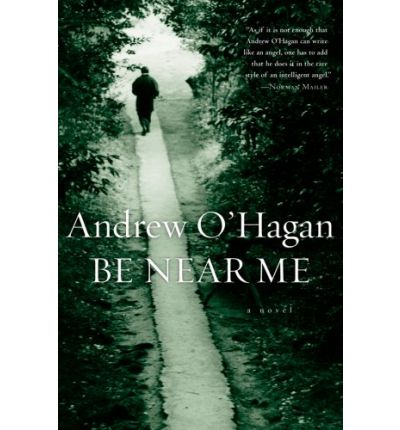
Be Near me – Andrew O'Hagan. Case no. 20100606

Scene of crime: Novel

Defendants:

Andrew O'Hagan, author

Case for the defence:

Be Near Me tells the story of Fr David Anderton, a priest born in Edinburgh, schooled in England and now regarded by his Ayrshire parish as satan himself – not just English but a paedophile at that. Being an Oxford man this may be expected, but to the denizens of Dalgarnock – a clutch of Orangemen, chavs, dole lovers, working class snobs, and ghetto-wannabes – he's a cuckoo in the nest who on refusing to conform must be destroyed.

Anderton ultimately is, not for forcing choirboys to receive his offering but for an ecstasy-fuelled kiss of the class hard man. His 'friend' the Bishop tries and fails to rescue him, as does his cleaning lady and in the end Fr David goes his own way.


Witness statements:

"O'Hagan's work has always concerned itself specifically with Scottish identity, and more generally with the structures and ideas that hold societies together, and the frail bonds which hold individuals to the body of society. He is a writer of stern and bleak ambition, but with a tender concern for the people who find themselves adrift and inadequate - for their particularity, for the singularity of their broken stories. As often with this writer, digressions can seem to slow the narrative and divert it; a bit too much of those Proustians, perhaps, a bit too much dinner-table argument over political commonplaces. But in the end he turns the wanderings back to his central purpose. He is a fine stylist, a penetrating analyst, a knowledgable guide to high thinking and squalid living, as observant and funny about the townsfolks' violent quirks as he is about the affectations of his sad central character. Between the lines, everything fits. This is a nuanced, intense and complex treatment of a sad and simple story.

"Read it twice." - Hilary Mantel, The Guardian

"O'Hagan has the power and exactitude to take the measure of a politically inert ex-industrial society subsisting on the long-chewed bones of sectarian and ethnic prejudices. He writes with bracing clarity, as if the sentimental despoliation of realism by television's treatment of working-class life had never happened. Yet, although much contemporary writing seems myopic and trivial in comparison, Be Near Me is simply too short, as if scaled down from its true ambitions, provoking admiration and regret in equal measure." - Sean O'Brien, The Independent

Findings:

My informant, Agent Orange, alerted me to this crime and I'm glad that she did. Great writers can tell us a lot about what society was like before the the Atomic Wars glassed it. Mega City scientists have been unable to learn anything new about from this book. What evidence they have amassed through Greene, Burgess and Waugh, British Catholic males were to a man mopey, and, in most cases, repressed homosexuals. O'Hagan's work merely adds to this hypothesis.

O'Hagan reminds me of an old perp, Lynard Smokey, I hauled in for jaywalking – asked why he did it, he'd respond with a promising story he swore would explain all, only to stop and drop it just as it started to get interesting. Perhaps O'Hagan thinks that Fr David is too interesting to share the story with many others, but as the old saying goes, never trust a man who uploads his own picture to Wikipedia.

Be Near Me touches upon the 2003 invasion of Iraq, the paedophilia paranoia of the late-20th to early-21st century, and touches most of all celibacy, but like the priest with his brief kiss, he doesn't go all the way. I've been part of the Justice system for nearly 30 years and by now I can sniff a motive from even the most sealed of cases, but even I struggled to find a story in O'Hagan's work.

His style is pleasant enough, and while Judges are deservedly known as hard-hearted, even we know when a character is meant to get some sympathy, but I rooted no evidence out for this here. It's like listening to an old lady describing her lost cat – to her the cat is the source of sunshine and personality. To me it's just another sheet of paper and the foreboding I'm going to have to go over and detailed how we found Patch digesting in some alien's belly.

Verdict & sentence:

Andrew O'Hagan, for cliché I sentence you to three years in the isolation cubes, and for the crime of telling a meandering story you are to serve your sentence in chains. Let this be a lesson to others.

Hilary Mantel, for attempting to mislead a Judge I sentence you to a year in the cubes. To be served twice.

Friday, 4 June 2010

Ashes to Ashes – Exhibits E – G and Summing up

Scene of crime: BBC One

Defendants:


Executive producers Ashley Pharaoh, Matthew Graham, Simon Crawford Collins, Jane Featherstone, Alison Jackson.

Case for the defence:

Ashes to Ashes finally ends after three series of supposedly-1980s action (mainly a bit of eyeliner and rolled up denim jackets). This time the final three episodes are condensed into one submission of evidence and the final sentence is given. As always, Mega City Judges will pull no punches (Tharg note: this means spoiler alert).


Witness statements:

"It seems that Hunt's been dead all along, I think. To be honest I'm not totally sure what's going on.... Did the people behind A2A know all this when they started, or are they just tying together all the loose ends together now, in a big old knot?" - Sam Wollaston, the Guardian
"Anyway, the question is: did the final episode deliver on its promises? Yes, absolutely, and with the impact of a punch in the gut from Hunt.
Whatever you may feel about Ashes to Ashes -- and it surely went on too long -- this was a cracking, supremely clever closing chapter, every bit as gripping and ingenious as the finale of Life On Mars." Pat Stacey, The Herald

Findings:

The last three exhibits have been submitted as one, which makes summing up the series nice and simple. I like things simple, leaves me more time to spend on the streets cleaning it of perps. Even fining someone for littering gives me more pleasure than this secondment to the Cultural Unit. But if the Chief Judge says you gotta go, you gotta go. Just you perps know that when I am back on the street I'll be itchier than ever to dish out some proper justice.

Justice, huh, what did our predecessors, the police, do before the judges brought law and order? Not much if Ashes to Ashes is anything to go by.

First there's Exhibit E, where a prison riot leads to the prisoners holding Gene Hunt's officers hostage. Guess that riot foam wasn't invented then so they couldn't subdue the prisoners that way, but looks like 1980s CCTV quality was much better than the history books suggest. And why Gene Hunt thought he could lead his men in I don't know, I'd have busted him down to rookie before you could say 'Judge Cal'.

Pc Viv took a shoot in a by-the-numbers script - foreshadow that something's wrong with him but is ignored, reveal that he's a traitor, give a speech on his motivations, colleagues who disown him, and a token bit of sacrificial action by Viv to redeem himself. I've seen that so many times we study it at the Academy. Guess Viv didn't.

The only saving grace is that Ray now appears to have a personality, but the downside was a heavy dose of Sam Tyler references, which only served to highlight how unlikable Alex Drake is and how badly done Ashes to Ashes is. It also showed how little real-world, beyond the coma interaction there is, but more on that later. Of course character development can be forgotten – I notice no one has mentioned Chris' little brush with the dark side in the last series.

Perhaps it's best that the past is forgotten lest we get the 'romance' we saw between Alex and Gene; prominent in the first series. But like the zombies from Judgment Day, the two have their dead romance rise from the grave. And like Judgment Day, they're all dead. Yes, that's the secret behind both Life on Mars and Ashes to Ashes. Do I need to go on...? Okay, the Chief Judge says I do. Well then.

Despite the inconsistencies – why Ray and Chris 'channelled' the real world in Life on Mars at times, why they don't remember dying (or deduce it, they're no Judges but they are detectives for grud's sake), or that they too had been back in time despite their mocking of Sam Tyler, it at least fitted into the third series of Ashes to Ashes.

Gene and Alex finally kiss, after a meandering build up to it in the penultimate episode, and she says goodbye after the Magical Negro Nelson guides them to heaven. An AD2010 pub. With the devil as a long streak of Mega City Law H756 Section 35 (public urination, prevention of). Grud no wonder we banned religion back in 2078 if this is what you were expected to believe in.

It takes a lot to move a Judge to emotion. There wasn't a lot, even in this final episode, but enough for some.

Verdict & sentence:

Up until the final episode execution was being mulled over. However, how can you kill something that's already dead? Trust me, we've tried before and it ain't pretty.

The final episode, though it made a hash of Life on Mars, did tie in with the final series. Ashley Pharaoh, Matthew Graham, Simon Crawford Collins, Jane Featherstone, Alison Jackson - Justice is not a harsh mistress, execution is commuted, I'm gonna be lenient and you only get 25 years in the isolation cubes. Add a year in solitary for not playing Bowie's Ashes to Ashes. You don't have to thank me.

Wednesday, 5 May 2010

Ashes to Ashes - Exhibit D

Scene of crime: Ongoing case BBC One Friday 23rd April

Defendants:

Executive producers Ashley Pharaoh, Matthew Graham, Simon Crawford Collins, Jane Featherstone, Alison Jackson.


Case for the defence:

This week the team discover that there's an undercover officer working on their patch - and she's not under Gene's command.

Louise Gardner has been sent to infiltrate told gangster Terry Stafford's operations and Gene has it out with her commander, DCI Wilson for pissing on his patch. Alex has a bad dream along the way and Chris calls investigating officer "guv" in front of Gene.

Witness statements:

"This fourth episode was on the whole more in keeping with the quality of last week’s episode more than the barnstorming opening two instalments. That’s to say it was a good to very good episode, but not quite Ashes To Ashes firing on all cylinders." - Simon Brew, Den of Geek

"Dan Owen regularly says that the crime stories need more work on Ashes To Ashes because they make up the bulk of each episode. In this instance, I totally agree." - Gerrard McGarry, Unreality Shout

Findings:

Do you think I was born yesterday, Pharaoh? I know what you're trying by making Chris call Jim Keats guv, but it was as realistic and in-character as a witness statement at 3 in the morning on a cold holiday.

Your habits are getting predictable, Pharaoh, and that's fine by us judges observing you before your inevitable incarceration but I think the civilians want something more. In a Bit of Punt and Dennis (currently languishing in the isolation cubes by the way) they spoofed old war films. Their MO was to  introduce a new character, let him tell his tale, usually one involving marrying his sweetheart on his safe return, and then declaring "dead!" The same could be said for new characters in Ashes to Ashes who throw themselves on the team's protection, or have something to prove, only for them to be another corpse sent to the resyk plant. All relevant characters are introduced in episode 1 of a series. All the others die. If only judging was that simple.

However, some characters survived who I wish hadn't. The police complain about overwhelming redtape, DCI Wilson must spend his time reading Shakespearian soliloquies and practising his pontification. No judge on my precinct has time for more than a "freeze, creep!" on the best of days, let alone in the midst of a string of junkie deaths.

Verdict & sentence:

Investigation still pending but I'm in a generous mood. 5 years a piece added to the current bill.

Wednesday, 21 April 2010

Ashes to Ashes - Exhibit C

Scene of crime: BBC One, Friday 16th April

Defendants:

Executive producers Ashley Pharaoh, Matthew Graham, Simon Crawford Collins, Jane Featherstone, Alison Jackson.

Case for the defence:

DI Alex Drake was shot in 2008 and woke up in a low-budget 1983.

This week a mad bomber threatens an election, and Ray has his life saved by a fireman after he runs into a flaming building. Despite being surrounded by firefighters with correct breathing equipment. Ray still runs in. He should be booked for endangering the life of his rescuer.

The fireman has a brother who's sleeping with his wife. This isn't a spoiler, it's because Ashes for Ashes is so by the numbers that any new character is up to something – in this case, his sister-in-law.

Alex, it's now established, has forgotten she's in a coma and her daughter, although she seems to be enjoying her fantasies of Heartbeat Pc Nick Berry with a smashed in face. While many of us would like to see that, that does not justify it.


Witness statements:

"The climax of the episode was fantastic." – Gerard McGarry, Unreality Shout

"What does seem clear is that Ashes To Ashes is continuing to lay down some narrative threads that we can’t wait to see resolved. This was the weakest episode of the three we’ve had of series three to date, but the standard was still good, and the decision to give Ray some spotlight time was a well rewarded one." - Simon Brew, Den of Geek

Findings:

Explosions and fires like it was a rehash of the Apocalypse Wars, but my main concern was that the cardboard characters would catch fire.

Yet another character development by numbers - big speech by the antagonist for empathy, even longer one by Ray because after three series of Ashes to Ashes. plus Life on Mars, the writers think it may be time to give him some character development.

Pc token woman aka Shaz makes some right-on jibes about the Falklands. But seeing as the war was to liberate a democracy from a dictatorship, her notion of right-on is not recognised by the Hall of Justice definition. Some mandatory re-education hypnosis may be needed on her.

Case note - "Bolly Knickers" is getting tiring as a knickname. Gene Hunt has become the office bore who uses knicknames that are only funny to him and where you cringe each times he uses it. Gene's engaged in "repeat until funny" mode. Scriptbot, disengage this phrase.

And where does Gene get his guns from? The Acme Corporation? Was 1980s London really so lax about weapons? No wonder their civilisation collapsed.

Verdict & sentence:

I should have locked you perps up a long time ago. You seem to think that because of your good work on Life on Mars you're free to do as you please. Justice doesn't work like that, she's blind. Lucky her, she can't see what you've sunk to.

I'm saving final judgment until I've reviewed all the evidence, but I'll tell you now, creeps, you're already looking at a long stint in the cubes at best. This episode alone deserves five years each.

Fresh evidence next week