Thursday, 28 July 2011

Bridesmaids

Scene of crime: Film

Defendants: Writers Kristen Wiig & Annie Mumolo

Case for the defence:

I give you Annie (Kristen Wiig), whose already depressing life sinks deeper when the bride's most recent 'best' friend, Helen (Rose Byrne) resents that a childhood friend should have the privilege of being maid-of-honour.

Annie takes her position as well as a broke and lovelorn girl can, but where her life seems pretty bad before, it gets worse – before long she's organising a meal that leads to explosive diarrhoea, sparking a panic (and air marshal) on a flight and destroying a bridal shower. Not only that, but she spurns the advances of a genuinely nice guy, Officer Rhodes (Chris O'Dowd) in yearning of use-them-and-lose-them Ted (Jon Hamm).

But when bride, Lillian, goes missing, it's not long before Annie steps in to save the day.


Witness statements:


"As Annie, Kristen Wiig, the film's co-author, is wonderfully good, able to behave quite crazily without being so exasperating that she loses our sympathy. It's her film and it's going to make her a star.

"Vomiting and diarrhoea jokes are not entirely new nor perhaps the apex of Western civilisation but the routine here, already famous, is destined to be a classic of its kind, the reference point. If you are going to do the uncontrollable emissions thing, having your sufferers, who have just ingested an "authentic" Brazilian meal, dolled up in bridal wear in a super-expensive all-white boutique, with just one loo, is a pretty good start - and they sure make the most of it." – David Sexton, the Evening Standard

"[T]here is something in Bridesmaids that is particularly interesting: how it offers a male, or male-seeming dimension that is not featured in all the other sugary girly-romcommy treatments of engagements, bridal showers, wedding ceremonies, etc: the world of status-envy and career-disappointment. It is the women's relationship with each other, and not with men, that is central.

"Obviously, Bridesmaids does resemble the Hangover template a little: one Bridesmaid, Megan (Melissa McCarthy) is in the Zach Galifianakis role. It's not exactly groundbreaking, but what's striking is how fresh and unusual the comedy looks." – Peter Bradshaw, The Guardian

Findings:

Chick flicks and Judges don't have a great history. Just check out the Sex & The City girls in the Black Museum at the Grand Hall of Justice. It's been known to make even some Cadet Judges turn pale.

The first half of the film is well-scripted, but during the second half I found my finger twitching on my lawgiver's trigger. The first half was relatively tight, but in the second characters were dropped and some scenes went on just a bit too long. Case in point, the 'freak out' scene at the bridal shower. Likewise, the drive-bys as she attempts to get love-interest Rhodes' attention, while funny, should have been kept tighter.

In addition, she dropped two characters, the newly-wed friend and the tired-mother friend, in the second half, making me wonder what she was doing having them if they went nowhere, particularly after some strong setting up for greater things in the first half.

Despite this, it's a well written film with a believable love-interest and moment of triumph that makes up for the other unbelievable parts.

Verdict & sentence:

Mumolo and Wigg, you sail pretty close to the wind in some parts, particularly in the second half. If you can cut this film from 2 hours 5 to 1hour 50 I will let you go without warning. Despite that, I think you have potential and that my judgment or your next film will be more positive.

Thursday, 21 July 2011

The Hour

Scene of crime: BBC Two

Defendants: Writer Abi Morgan & Producer Ruth Kenley-Letts
 
Case for the defence:

Your Honour, The Hour is a new serial set in the BBC of 1956, following the career of rising news star Bel Rowley (Romola Garai) as she is made producer for a new programme, also called The Hour. She is joined by an earnest Freddie Lyon (Ben Whishaw) as a principled, indeed, rather too highly principled, reporter, although it takes a good few interviews and prods to get him in with them.

Fronting the programme is married ladies-man Hector Madden (Dominic West) who waste no time flirting with Bel, piquing Freddie. However, there's more to The Hour than office and sexual politics. An Egyptologist is murdered at a station and Freddie sniffs out something more than a simple stabbing and MI6's name is soon bandied about.

Freddie's unconventional ways of getting evidence are not just limited to bribing the police (not, I hasten to add Your Honour, an encouragement any should try to corrupt a Judge) and being friends with a debutante who seems to know more than a little something about the late Egyptologist. She too is found hanging by Freddie.

Bel's problems, are of a more worldly nature and soon discovers that controlling Hector may take up a lot of her time.


Witness statements:

"A love triangle in the early BBC was not deemed sufficient attraction, however. So an extraneous thriller plot has been rudely inserted into the mix. A brilliant academic is nastily murdered by being stabbed in the throat. A blonde deb (Vanessa Kirby) who may have been the prof's lover comes to warn her old pal Freddie that there's a conspiracy afoot. Then he finds her hanging from the shower, while a sinister chap lurks on street corners doing the Standard crossword as a broad indication of occult intelligence. What can it all mean? That the producers didn't have the confidence to do it straight, without this melodramatic underpinning, I'd say.

"Nor for all the creditable suitings and sets, have they found a style other than that of the usual period costume drama, camping it up." - David Sexton, The Evening Standard


"It isn’t Freddie’s pomposity I mind, so much as the drama’s. At times it appears to be less a story than an exercise in upbraiding the past for failing to live up to the politically correct ideals of the 21st century.... I wouldn’t want to give up on The Hour too soon. Abi Morgan, its creator, wrote 2003’s Sex Traffic, which won eight Baftas.

"Maybe next week’s episode will jettison the waffle about broadcasting and prejudice, and turn into a gripping thriller focused on Freddie’s mysterious murdered man. I hope so, but I have a bad feeling we’re in for more 21st-century sermonising. 'You know, we really oughtn’t to be smoking all these cigarettes – we’re creating a cancer timebomb. Oh, and do stop patting my bottom, sir, or in 55 years period drama audiences will look upon you most unfavourably.'" - Michael Deacon, The Telegraph

Findings:

Touted as a 'British Mad Men'? Well, it has suits and smoking, I give you, and period soundtrack – you can't miss that, it's so loud it and consistent it obscures most scenes. But in terms of characters and story? No, in fact, I'm giving Morgan and Kenley-Letts a year for false representation.

On with the findings. Well, to start with Freddie's continual calling Bel 'Moneypenny' for no real reason bordered on making viewers think that was her name, and the historical inaccuracies of missiles in 1956 Russia is sloppy. Add six months to your sentence, Morgan.

But the most infuriating finding is that Freddie is just not sympathetic. He's meant to be principled, but bribing an officer for information is not good at the moment, and his principles are pontificated and pompous, not sympathetic. He didn't even try to save his debutante friend's live after cutting her noose (from a shower head – 1950s Britain must have built them a damn sight stronger than anything since).

As for the plot... I think there was one but forensics are still examining it. There's a TV show starting, and a conspiracy by the end of the programme, but it takes a long time getting there. Unlike me and my sentencing.

Verdict & sentence:

What did I tell you? Justice is swift. The Hour was turgid and dragged, and obsessed with the USA – apparently BBC news in 1956 only focused on America. This just highlighted the many flaws in the programme, from unsympathetic protagonists to making something exciting dull, and just too little believability.

To sum up the programme: worthy and turgid. To sum up the sentences: life. Take them away.

Friday, 1 July 2011

How to be Good

Scene of crime: Literary

Defendant: Nick Hornby

Case for the defence:

How to Be Good, published in 2001, is by my client, Nick Hornby, your honour . His story is that of Katie Carr, MD, and her husband, David Grant, the self-styled "angriest man in Holloway". It starts with her affair and almost Freudian slip of a request for a divorce.

But instead of the expected arguments, David goes to a spiritual healer, DJ GoodNews, who removes his anger and replaces it with a naïve, muscular do-gooderism. GoodNews soon moves in and encourages David and by extension his family – Katie and their two kids, Tom and Molly – and then their neighbours to take in the homeless. While Molly sides with David, as she did before GoodNews' laid his healing hands on her and took away her 'sadness', Tom refuses and sides with his mum, seeing it all as crock.

David works with GoodNews on a book, "How to be good", but while this fails to materialise, Katie's situation and take on family life are different by the end.


Witness statements
:

"Having established the promise of the scenario, however, it seems that Hornby does not quite know where to take it. The homelessness project fizzles out before it has really got started, David's faith in GoodNews wanes, and when Katie's self-examination threatens to be something darker, more destructive in the manner of, say, Hanif Kureishi's Intimacy, Hornby pulls the plug on seriousness and deflates her despair. Her story thus ends a little unsatisfactorily, drifting between social comedy and the mundane compromises she makes to preserve faith and love. You might say that, by the end, the questions this engaging book opens are too big for the lives it describes." – Tim Adams, The Guardian

"''How to Be Good'' is replete with Hornby's trademark wisecracks, aperçus and put-downs[...]But in the end, this oddly retro novel is hamstrung by the unequal contest between Katie and GoodNews, and by Katie's monotonous hand-wringing. ''High Fidelity'' and ''Fever Pitch'' grabbed the reader by the lapels because the narrators -- the record store owner and Hornby himself -- while slightly touched in the head, were true originals. Katie Carr, Hornby's marionette in ''How to Be Good,'' is a far less entertaining M.C. She is the kind of intelligent, practical woman who builds first-class societies but second-rate novels." – Joe Queenan, The New York Times

Findings:

A Nick Hornby book set amongst North London Guardian readers. Hornby, you can get away with it once, twice, and just about three times, but this is too much. I'm itching to sentence you just for that. You should write about what you know, so I'm giving you 200 hours community service outside of Holloway so you can get to know other bits of BritCit. Don't worry, you'll be protected from most juve attacks. Hope you have your own body armour as we're all out at the moment.

You wrote this in 2001 but even by then it must have seemed dated with late-1990s references to 1-2-3-4 Get with the Wicked, 'crazyily down with it' lady vicars, and fretting about comprehensive kids who ought to be more loveable in principle then they really are.

But those aren't the worse sins. It's the lack of story, the picking up and dropping of themes, and generally ambling like a senior citizen in a motoped that infuriates me most. And I get infuriated easily. GoodNews is a poor pun on a a non-religious Gospel. Yet it never gets anywhere past one convert, David, and no real guidance. The How to be Good within How to be Good is never really shown and so it's never sent up or discussed. It's a plot device.

Unlike your other books Hornby, you rely too much on tell. And Katie does tell, mainly to us the readers and Judges, but also to her one-dimensional non-listening friend. As a Judge perps tell me a lot of things, but I need evidence and it's in desperately short supply here. As such, you fail miserably.

Verdict & sentence:

Automatic five years hard labour for reminding me of Richard Blackwood's existence. Add a further four in the isolation cubes for depending on telling over showing, and a further three for slipping for previous good form. You also used a very flimsy pun with GoodNews, so we'll round it up to 15 years.

But where do you think you're going Hornby? I'm not done with you yet – I've many other of your books to deal with. You're going back into the holding cells.

Sunday, 19 June 2011

X-Men: First Class

Scene of crime: Cinema

Defendants: Director Matthew Vaughn, storywriters Sheldon Turner and Bryan Singer

Case for the defence:

It's 1962 and the world is starting to become aware of the mutants in its midst. Charles Xavier, newly created professor (or just lecturer?) at Oxford University is drafted by the CIA to help investigate mutants. Abandoning his scholarly work, Prof X soon shows himself as a man of action and recruits other mutants, including holocaust survivor Erik Lensherr – Magneto.

With the US and USSR squaring off over the Cuban Missile crisis, it's all due to the machinations of former death camp doctor Shaw and his team of mutants, their plan to devastate the world to let mutants, under Shaw, prosper. The X-Men disagree.


Witness statements:

"First Class embraces a few embarrassing clichés: the few non-Caucasian characters are all dead or evil by halfway through the film, and a handful of already-ridiculous lines get infused with operatic, laughable portent that clash with the movie’s otherwise more humanistic take on the superhero genre. But First Class largely does what it sets out to do, by turning out another crowd-pleasing comic-book film designed to bring in new fans while gratifying the old ones." – Tasha Robinson, The AV Club

"X-Men may not take your breath away - director Matthew Vaughn is a kinetic director but he lacks personality and still can't handle emotional beats - but it has enormous pulp watchability. It also wins bonus points for not bothering to shoot in 3D." - Siobhan Synnot, The Scotsman

Findings:

X-Men 3 disappointed – 30 years in the cubes for the production team if I recall – but that's not to stop Hollywood since the discovery of the reboot. First Class is meant to be set in 1962 but bar a few tape-to-tape computers and Emma Frost's fembot dress sense, and Prof X paying for a beer with the equivalent of a £100 note, there's not much to suggest that this is then. Even the Cuban Missile Crisis and the USSR does little to make the atmosphere 1960s – the tweed and rollnecks are more retro than original. After studying the Ipcress File and Bond films in the archives, this just doesn't match up.

I dislike superhero films out of principle – every time one comes out, another bunch of juves square up to the Judges thinking that a costume makes them invincible. A nightstick to the head soon dispels that idea. This one goes at a good pace and overall lacks the cheesey dialogue of most films. The set pieces are well done and it avoided 3D, putting their money in script work it seems.

Verdict & sentence:

Comic book adaptations are more hit than miss. Or in terms of the Justice Department, more cubes than seats are dished out. First Class isn't up to the Oxford brilliance of Professor Xavier, but it has put in a steady effort. There's also a reprimand for obvious use of trope - black man dies first.

However, I'll issue notice Vaughn, Turner and Singer – you've been warned about the franchise collapsing. Do this and I'll make an example of you. You've been warned.

Friday, 8 April 2011

America's Most Hated Family in Crisis & My Brother the Islamist

Scene of crimes: BBC Two Louis Theroux & BBC Three My Brother the Islamist

Defendants: Louis Theroux & Robb Leech

Case for the defence:

Two programmes in the space of a few days deal with what to many is an alien phenomenon – people who, devote their lives to God (or Allah) and letting everyone who isn't with them just why they're going to hell.

Louis investigates the infamous Westboro Baptist Church (WBC) - nominally Christians, but going by most of their comments, not a Christianity anyone else would recognise. As one protestor asks in the video – "did you think Jesus died just for you?"

Louis had been there before, for the 2007 documentary The Most Hated Family in America and returned to find how the 'most hated family' had changed – including the casting out of daughters by fathers due to what most would see as minor transgressions. Louis played the bewildered outsider who would never understand the cult's teachings, and they didn't seem to keen to take him on (or even one potential convert).

Robb, by contrast, was bewildered but not an outsider as his subject, Salahuddin, formerly known as Rich, Robb's step-brother. Both grew up in Weymouth but one day Rich read about his brother as being one of the extremists following Anjem Choudary, the 'mad mullah' who wants sharia law in Britain. This was odd to Rich as just a year before he had gone on a holiday to the Med together, presumably for the usual sun, booze and birds.

Now he was protesting military funerals and calling for adulteresses to be punsihed. Like the WBC, if you aren't with them you are against them and they want nothing to do with you other than let you know just how utterly wrong you are. Like the WBC, it cut up families – by the end, Robb could not take that his step-brother would only shake with his 'unclean' left hand. Not all converts were this distant - 17-year-old Ben (Ahsan) and his relationship with his mother, although not broken, was a another aspect to the documentary.

Despite being about two different religions, the style of interviewing – very much background, and letting the subjects peak for themselves – and topics of religion and family (and sanctimony) showed more in common despite the surface differences.

Both focused on people who saw problems in their world and turned to men who gave easy, un-nuanced answers – Fred Phelps (WBC) and Anjem Choudary (Islam). Of course, I hasten to add, the Chief Judge and the Judge System in no way falls under this and it does answer all life's problems.


 Witness statements:


"There was a mixture of bafflement and sadness in his voice as he tried to get his head around being told the young Muslims he’d encountered through Salahuddin, all perfectly welcoming, could never truly be his friends until he converted to Islam.

"That was never on the agenda and, by the end of his film, Robb and his stepbrother were as far apart as they were at the start." – My Brother the Islamist - Keith Watson, The Metro

"Despite their perverse attitude to proselytising, it is impossible not to conclude that the Phelpsites love publicity of any description. Theroux has given it to them in spades – many sects, convinced of their own invincible rectitude, can only dream of two hours of largely unchallenged primetime television. No wonder they welcome him. If there is a next time, he ought to take a theologian with him who might penetrate their carapace of biblical certainty and challenge them on their own ground." – America's Most Hated Family – Stephen Bates, The Guardian

"[Robb] Leach followed Salahuddin to east London, to find out what had turned him, within six months of converting to Islam, into a loudspeaker-toting fundamentalist. He didn't really reach a conclusion, but he did meet other converts preaching global jihad, including 17-year-old Ben, another white boy from Weymouth. That they reminded me strongly of daft Barry (Nigel Lindsay) in Chris Morris's sublime dark comedy Four Lions did not, alas, make them remotely funny." – My Brother the Islamist - Brian Viner, The Independent

"The "in Crisis" bit of the title turned out to be a bit wishful. Yes, a couple of members had managed to escape the lunacy and appear to have survived intact. But their departure had only stiffened the resolve of the faithful who – however close they'd been to the heretics – stuck to the party line that God knew exactly what he was doing and would take his revenge for eternity. The group also now have a weird line in bilious pop mash-ups, adding lyrics of venomous religious piety to chart-topping hits. One hopes that the younger members might still be saved but for the elders who continue to feed them poison the suggestion painted on an opposition poster seemed most appropriate: 'Drink the Kool-Aid already'." – America's Most Hated Family – Tom Sutcliffe, The Independent


Findings:

At first I wondered why the Mega City Prosecution Service brought both of these cases together to be tried – one's about  Grud-and-man bothering Christians, one about Alluh-and-man bothering Muslims. True, it's an archaic case as religion's no longer allowed – we have enough crazies without adding Grud to the mix – but on close examination I can see why.

Both documentary makes are restrained and let the subjects speak on their own, even if it were me or another Judge they would have a very long list of questions to answer under interrogation. Both groups, both fundamentalists, were nice enough individually (subject to any crimes they may have committed, I haven't investigated them. Yet) but as a group hateful. Both protested against soldiers, and told others that hell is the coming price of their disbelief. Wish I was there, they'd see the cubes as their punishment soon enough.

Both groups of perps were doing their best to work the primitive 21st internet and media to their advantage and encourage others to hate in their own special way. Already there are so many crimes that this should be a summary case against them – they're easily looking at isolation for the rest of their lives, with the potential for cryogenics to ensure that they do not escape their just punishment with death.

There were differences between them of course. The WBC had women as active as the men, something the Muslims did not approve of (so add sex discrimination to the charge sheet). My Brother the Extremist also had some more nuanced members than the WBC group, even those who left. The Muslims too were keen on converts, while the WBC wallowed in smugness as their belief of being the elect. While they both seemed to be keen for the Apocalypse, the WBC came across as so shallow that it was almost all it wanted – one of the subjects herself said she 'hoped' it would be soon.

Of course the overall difference is that My Brother the Extremist was more personal that Theroux's investigation, and Theroux's ignorance and unchallenging tone was a pain, while Robb's could be seen as someone who wanted to remain with his brother.

Verdict & sentence:

As I said, the charges against the subjects are so obvious that there's no need for a defence for them, they're already being prepared for isolation.

Theroux, you have mitigating circumstances for wanting your subjects to speak out, but by descending to their level by giving your beliefs you then don't defend them or challenge theirs. This is bad practice, albeit not a custodial offence, so let this be a mark in your official government file.

Robb Leech, by contrast, your lack of challenging of the subjects appeared to allow you to gather more evidence against them and as such is excused. I want to see further evidence of your work, however, just to be certain.

Wednesday, 30 March 2011

The Unsettling Case File of the Reimagined Detective

Scene of crime: BBC One

Defendants: Steven Moffat and Mark Gatiss

Case for the defence:

Sherlock re-imagines Sir Arthur Conan Doyle's Victorian 'consulting detective' in modern London, complete with Baker Street address and Afghan war veteran Dr Watson as his sidekick.

While how Dr Watson and Holmes meet, and displays of Sherlock's observational powers, stay true to the original version, things soon take a turn to the modern in these cases. However, murder and crime – as well as his nemesis, Morairty – are, unfortunately, timeless.

Benedict Cumberbatch stars as Sherlock and Martin Freeman as Dr Watson and in the first episode, A Study in Pink, an update on A Study in Scarlet and its poison pills.


Witness statements:

"Sherlock worked because it was having fun. It also let down the po-faced pretence that the suffocating abundance of TV detective shows often labour under: that the detective actually cares about the victims. This Holmes revelled in horror: “Four serial suicides and now a note. It’s Christmas!” How have Barnaby, Taggart, Marple et al hidden their own jubilation for so long?

"The new Sherlock is quite clearly a sociopath: we were told that he is incapable of friendship, has no interest in sex, and takes drugs. Quite gone are the hints, obfuscations and unsaids in Rathbone and Brett’s films that meant we were never quite sure if Holmes was a total nut job or a jolly decent bloke. Here we have only a nut job – albeit a brilliantly portrayed one – and that, I think, is a bit of a shame." – Serena Davies, The Daily Telegraph

"I like Benedict Cumberbatch in the title role. He has the right edge and energy, the razor-sharp mind, but also the lack of social skills and impatience that appears to border on cruelty...Less successful is the story of this opener, called A Study in Pink. A disgruntled cabbie with a terminal condition forces random people into playing Russian roulette with deadly pills. They all lose.

"I had a nagging sense of recognition throughout. There's something about the pace of it, and the comedy; even the youthful hero with the cheek and the cheekbones and the geeky chic - charming, attractive, but asexual . . . what is it reminding me of? And then it came to me! It's no surprise I suppose, given who's behind it, but I think Steven Moffat has created Sherlock Whoms." - Sam Wollaston, The Guardian

Findings:

Modernising classics can be dangerous, and as such I've locked away in secure isolation several writers who have tried to do so. They don't mind, they're so wrapped up in their own brilliance that they fail to notice where they are.

Moffat has good form – he updated Doctor Who and brought it to a wider audience without succumbing to question-mark bedecked tailoring. And gains judicial approval here is Cumberbatch, who manages to keep Holmes' solitude and idiosyncrasies and make them believable, he's lost some of the superman qualities of the original. In addition, Mrs Hudson now has some character to her.

Character, in general, I approve. Script, I don't.

Starting with a press conference – or as it's known to the Judges, an exposition plant – and lazy, heavy, references to blogs and texts doesn't make a great start. Nor is making us believe that army doctors are sent out to fight.

It also repeats itself many times – saying out loud the CGI text, which analysis suggests is 'Holmesvision', although it is more TV for the learning impaired – or characters repeating what has just been said. But I repeat myself. Unnecessary and awful. It also has Dr Watson as a voice but not an actor – he says things are "fantastic" but fails to act or react that way.

As for tropes, you're already guilty of the press conference. You then descend to contrived coincidences and the atmospheric, abandoned warehouse. There is also a lot of stupidity proportional to the density of the plot, where Holmes is brilliant enough to notice tiny mud but not that he didn't order a cab despite the cabbie's persistence.

All in all, Holmes himself is brilliant, but he's surrounded by lesser beings. Shame that includes the scriptwriters.

Verdict & sentence:

First, counsel for the defence - 12-weeks in isolation for expressing doubt on the ability of the Judges to remove crime. I always knew you were on the side of the perps, now you are one.

Moffat and Gatiss, in your defence Holmes is rounded, and believable, and an improvement on the original. However, you sacrificed the other characters, particularly Dr Watson. For this you get a mere decade in isolation, and in recognition of your past talents, you will be eligible for parole after nine years.

However, you will report to me in a month's time for there is something I must deliberate on. The original Holmes was not just a detective, he changed the shape of policing and was an inspiration to forensic detection, something to which I and my fellow Judges are greatly indebted. Your current version of Holmes is a variant on the current crop of TV detectives, not the unique one of the original. What I need to decide is whether producers of your calibre are capable of such brilliance or if you are guilty of nothing more than being yourself. It is also your sentence.

Case dismissed, don't let me see you here again on this charge.

Friday, 21 January 2011

The Walking Dead

Scene of crime: FX UK

Defendants: Executive Producer Frank Darabont & Gale Anne Hurd

Case for the defence:

The dead walk! The Walking Dead began life as a comic book before being signed up to a limited run of six episodes to see if their was appetite for seeing the undead eat the living. There is, and there'll be 13 more episodes hitting our screens in October. This first series has introduced us to sheriff's deputy Rick Grimes first as he awakes from a coma to discover that the undead have mostly conquered the world and then on his quest to Atlanta, Georgia, US as he hopes to find his family.

The short (by US standards) series means that he's reunited by the third episode, much to the disquiet of friend and colleague Shane Callies, who had taken Rick's place as man of the family in more ways than one. The survivors include a range of mostly working-class to lower-middle class survivors based on a hill on the outskirts of the city. With minorities forced to live with racists, and the living desperate to survive, momentum comes from the human drama rather than any zombie-slaying.

By the end we discover that these are Type P & Type F zombies due to an infection of unknown origin that turns all who are infected into the undead in hours. With no city safe due to the sheer mass of zombies, the survivors are determined to find somewhere they can live in peace.


Witness statements:

"Finally! We’ve waited so long – far too long – for a zombie TV series to arrive, and the quality of Frank Darabont’s adaptation of Robert Kirkman’s ongoing comic is such that it’s been well worth the wait... Our only disappointment is that the series’ initial order is just six episodes. IT’S NOT ENOUGH!

"Our only complaint is that six episodes simply ISN'T ENOUGH!

"The way the scriptwriters handle the character of Shane continues to fascinate." – Edited statements from Ian Berriman, SFX

"The more I think about it, the more I believe that the way the big writing shake-up of The Walking Dead staff is going to make or break the show. Although I might be overestimating the importance of the event, the exact nature of which is still elusive, it definitely looks like Frank Darabont wants to take a more auteur-driven approach to the show, working hands-on with all the scripts and only farming out stories to freelancers when absolutely necessary.

"I don't think we'll really be able to judge this show fairly until it gets the time to stretch in its 13-episode second season." - Leonard Pierce, The AV Club

Findings:

Case for the defence is commended for using Comic, not Graphic Novel. Take away the pictures and you rarely have the kind of sound dialogue and character development that makes a good novel (and one year for Public Lechery for those who just complained that they'd miss the most common superpower).

This is demonstrated in episode Vatos by the comic's author, Robert Kirkman, which is by far the weakest episode. The series as a whole has weak dialogue and broadly painted characters, most of whom are barely seen and their names forgettable, but Vatos is the nadir. I'm expected to believe that hardened perps are really just nurses and porters looking after the aged, and that a simple couple of lines of dialogue can change everyone.

In terms of characters, honest Rick Grimes is only interesting because he's compared with his pallid wife. Instead, and like Mad Men, it's the morally confusing characters who are of most interest – former partner (and unaware cuckold) Shane and racist-but-practical Daryl are the two who are the most human and most interesting. Other times when we are introduced to characters it's jaw-grindingly clear who will die, as is the case with two girls fishing and bonding and reminiscing about their father. It's not just a zombie bite that can induce vomiting.

Despite this the series as a whole moved at a good pace – while Vatos had one character rescued in the same episode, another rescue was drawn over two episodes (or perhaps even series). The scientist and the Centre for Disease Control was rather clunkily done, and with a heavy dose of Exposition Computer.

Verdict & sentence:


My judgment is appropriate to a series on the undead – it's not a full reprieve, nor a full punishment. On the whole, the characters are pale, disposable and it's heavily signed when they are of importance. However, some such as Shane and Daryl stand out and will continue to generate interest. Likewise, the focus on the human drama over zombie slaying has stopped this from rotting in the schedules.

Yet some episodes have been clumsily done and the usual zombie clichés – relatives who won't slay their loved ones, people unprepared to fight – are there. That they have chosen to site themselves in Camp Sitting Duck with no defence nor weapons or training is a dissolution of their civic service. Judges know how to cope with zombies –start shooting and don't stop till the undead are dead.

Overall, I look forward to judging the second series. Case adjourned.

Tuesday, 18 January 2011

Case File 007Wii: GoldenEye 007

Scene of crime: Wii

Defendant: Eurocom, developer

Case for the defence:

GoldenEye 077 is a first-person shooter reimagining, not a remake, of the 1997 N64 classic of the same name. With Daniel Craig replacing Pierce Brosnan as Bond the game has been given a darker feel to reflect how the latest Bond films.

Likewise the original story has been reimagined, mostly following a modernised version of the GoldenEye film and new versions of the original characters appear, including Alec Trevelyan and Xenia Onatopp.

Released only on the Wii, players can use the Wiimote, the Wii Zapper, Gamecube or Classic controllers to play the game, giving the welcome option to play the 'traditional' way with controllers, or point at the screen and shoot with the Wiimote. The game engine is based on Dead Space so has a developed and smooth Wiimote use, although aiming is still rather shaky.

The dark tone is clearly aimed at the Call of Duty market, where grey and moody (or, if in the desert, sandy and moody) are the prevailing tones. In addition, the free online multiplayer option means that Nintendo's rather sparse online community has a new title to play with.


Witness statements:

"Playing updated versions of the original Dam and Facility levels in the single-player campaign is a fun experience at first, but the game as a whole suffers from generic level design, awful quick-time events, and a terrible final boss fight...

"GoldenEye 007 doesn’t feel like the retro dream it’s meant to be. This Bond game is lost in limbo somewhere between last generation and modern day shooters. Only diehard Bond or FPS fans with nothing but a Wii should bother picking this one up." – Tim Turi, GameInformer

"Despite some painfully dumb enemy AI, the campaign is worth your time, especially since it won’t take long, and the multiplayer split-screen is a blast — both in the actual gameplay and the nostalgic feelings it will illicit.

Overall, GoldenEye 007 does the name proud. A good reboot of a classic game, and a must have for the FPS starved fans on the Wii." – Ryan Fleming, Digital Trends

Findings:

Reimaging is the same as a remake, just as every time a perp engages in a "trivial matter" he soon finds out that he's actually carried out a major infraction of the law. And that's just what this is, a big crime that's trying to get away with it.

Gameplay is grey. The original game, which I booted up on the N64 in the Hall of Records, is Bond through-and-through, from the mock BBCFC classification (impersonating a government department, ten years to the development team on that one) to the 'dossier' save files and Bond music. The Wii version starts with a long, flat copyright notice and fades to grey and generic music that could be found in any shooter.

I like having options and stuck with the Wii Zapper as it reminded me of my own Lawgiver, but that the training mission consists of assassinating government staff is not condoned.

Verdict & sentence:

The last time I sentenced someone for Remake Perpetuated as a Reimagining I had to go up against Charles Bronson. I won.

Nothing tells me that this is Bond, the atmosphere is lacking and it's replace with Daniel Craig and voice acting that has so many flat lines I've declared the script legally dead. I think that's for the best for even the afterlife is beyond my jurisdiction, for now.

The gamemakers have taken Call of Duty and simply added Daniel Craig's features and a vague reference to the 1995 film. Then they added shaky controls and a pedestrian gameplay, other than Bond can now happy slap and upload the contents to YouTube with his mobile phone.

Verdict: Execution. I would consider using a PP7 to carry this out but not being Bond fans you wouldn't recognise the reference. On your knees and face the wall.

Tuesday, 14 December 2010

Case File C00G4N: The Trip

Scene of crime: BBC Two

Defendants: Producers Andrew Eaton and Melissa Parmenter

Case for the defence: Comedians and impressionists Steve Coogan and Rob Brydon star as semi-fictionalised versions of themselves in a six-restaurant, Michelin-starred tour of the north of England. Although based on their real live personas, this is presented as a standard comedy format and not as a documentary, once popular in the early 21st-century.

Coogan is supposed to have accepted an Observer commission to review restaurants in a bid to impress his American girlfriend Misha, but when she pulls out he takes Rob instead. Along the way they bicker, usually in-character as a celebrity, do drugs, cheat on partners and try and get one up on the other. They also eat some exceedingly good food.


Witness statements:

"Underneath it all, though, runs the question of what it is the Coogan character thinks he’s looking for in life. Largely improvised, the programme blooms to become a very touching exploration of friendship and ageing.

"Nothing happens. Everything is happening." - Damien Love, The Herald

"It’s determinedly uneventful, hardly penetrative in terms of character and not especially funny. But what in other hands would be maddening, or soporific ends up being strangely beguiling – an exercise in trying to hold an audience with the tiniest of titbits. Coogan and Brydon give the viewer so little that after a while you start filling in the gaps yourself. Ultimately, of course, it’s all down to the relationship, and here the implication is plain – the two of them belong together." – John Preston, the Daily Telegraph


Findings:

By rights I ought to commit summary justice – two comedians playing exaggerated versions of themselves, swearing to never return to British TV, this has "meta" written all over it, and for the public good that's an automatic execution. However, they just get away with it – just – as they don't draw obvious attention to it. Even Brydon calling "you're stuck in a metaphor" to Coogan as he falls off stepping stones comes across as genuine rather than contrived.

The problem is the storyline. It doesn't completely lack one, with Coogan's attempts to work out where his live should go and what family means, but it doesn't go deep. The pilot, with the tension between Brydon and Coogan, both slightly envious of the other, and Coogan and his ex, led to laughs amongst our test group. However, it never goes further and like Brydon's constant use of impressions, it gets grating.

At the Justice Department we know to spot tell-tale sings in perps if they are behaving in a pretentious manner in public (sentencing guideline: five to 50 years stretch in the cube). Philosophy, particularly foreign philosophy, poetry. The pair are in the Lake District, so poetry is the charge. But beyond Brydon memorising a poem, he goes no further, learns nothing, does nothing. Brydon is Coogan's catalyst but not much more. Instead of creating depth, they flesh out or bring in some minor characters. It's no substitute.

Citizens looking for more will be, perhaps like the comedy pair spoiled on Michelin-starred food, be looking for more.

Verdict & sentence:

Occasionally, a judge has to use discretion and balance mitigating factors against the crime. Reluctantly, I am going to admit mitigating evidence here and restrained from the summary execution. However, let us not forget that a crime has taken place.

The producers and Steve Coogan, I sentence you to re-education classes. Rob Brydon, you never did much, you are free to go – once the Justice Department surgeons remove your vocal chords.

Wednesday, 29 September 2010

Birdsong

Scene of crime: The Comedy Theatre, London

Defendants: Stage adaptor Rachel Wagstaff, director Trevor Nunn. Original author Sebastian Faulks.

Case for the defence:

Sebastian Faulks' World War I epic Birdsong has been in film development limbo for several years, its subject – the 1910 meeting of a young Englishman and his affair with his French hostess, his subsequent service in the war, and his descendents' lives in the 1970s – has been thought inadaptable. However, Wagstaff does so and despite trimming the 1970s section, this is an epic at around three hours with one intermission and a five-minute break.

The play starts, as we're told on the projector screen, in 1910 in a very conventional play, one that could have been written at the time – a young Englishman, Stephen Wraysford, arrives at a well-to-do family house and is entertained. So far so conventional, but when he hears his host beating his wife, Isabelle, Wraysford's attraction to this older woman grows until they embark on an affair. They are found out and elope, but before long Isabelle tires of their poor life and returns, devasting Wraysford.

Act I ends with the sound of war and the stage comes to life – the moving backdrop is now not just a projector screen but three-dimensional, the trenches. As we return in Act II, we're introduced to Sapper Jack Firebrace, a pious man who has a turn at entertaining the troops in drag, but he angers the-now Lt Wraysford by sleeping on duty. Despite the threat of execution for this, the two become friends, or as close as two solitary types can. Wraysford wants to see Firebrace's tunnels beneath the Bosch's lines and despite attacking in the bloodbath of the Somme stays at the front.

His previous life catches up with him when his unit is stationed in Isabelle's old village and he seeks her out. Finding her, seven years later he still loves her despite her wounds, but Isabelle has fallen for a German soldier and won't return to Wraysford. Nor will she tell him about his son. Isabelle's sister tries to, but it is for nothing and he returns to the front. By 1918 he is down in the mines with Firebrace when the Germans devastate their tunnel network, Wraysford manages to blast his way out, saved by a German soon after the Armistice is signed.


Witness statements:


"Nunn’s direction is sometimes turgid, with unconvincing sing-songs round the piano. The play’s most moving moments are the simplest, with Lee Ross as the sapper Jack Firebrace writing letters to his wife and reading her replies. Thanks to Ross’s beautifully simple and direct performance, the scene when he receives terrible news from home is by far the most moving in the play. It is not an easy thing to play uncomplicated goodness without sliding into sentimentality but Ross resists the temptation and moved me to tears.

"…Nevertheless this stage version strikes me as cumbersome and unnecessary, and never comes close to matching the dramatic power and extraordinary tenderness of RC Sherriff’s Journey’s End, written from his personal experience of the Great War, rather than based on scrupulous research like Faulks’s novel. My advice would be to stay at home and read the novel, or better yet, a collection of the great poems written by Owen, Sassoon and others who actually served in the First World War." – Charles Spencer, the Daily Telegraph

"Wagstaff’s version retains many of the novel’s intriguing elements: its concern with class, its sense of war as an exercise in blinkered bureaucracy, its depiction of an early-20th century crisis of masculinity. It’s poetic, too, and beautiful in places, thanks to John Napier’s clever designs, which make generous use of projections by Jon Driscoll and Gemma Carrington. The sound, by Fergus O’Hare, is also excellent. Besides Barnes, there are skilful performances from Zoe Waites, Nicholas Farrell, Genevieve O’Reilly, and above all Lee Ross as Jack, a tunnel-digger with a quirky music hall sensibility. Yet whereas the novel is often claustrophobic, here there is less visceral immediacy. Events are narrated when they really need to be dramatised. The result is too rhetorical: we’re told what we ought to be shown. Barnes has an elegant way with his expository speeches, but Trevor Nunn’s production is often static, and, for all the gravity of its subject matter, it doesn’t engage us fully." – Henry Hitchings, the Evening Standard

"The weakest part of the play is the first third which deals with the sojourn of a young Englishman, Stephen Wraysford, in the Amiens of 1910. As a working guest in the house of a rich manufacturer, he falls in love with his host's wife, Isabelle: an experience that colours his whole life. But, although we see the affair through Stephen's eyes, this feels like filleted Faulks. The industrial unrest that provides a context to the affair is cursorily dealt with. Even the anguish of the cuckolded husband, who in the book rushes from room to room seeking evidence of tainted bedsheets, is reduced to a single cry of jealous rage. But when the play moves to the western front, from 1916 to 1918, it exerts an emotional grip" - Michael Billington, the Guardian

Findings:

Starting a play with not one but three "as you all know" in the first thirty minutes is an automatic year in the cubes. I don't care that you may be trying to evoke the plays of the period, with the preconception with witty talk and singing songs, it comes across as sloppy.

Despite the background of industrial unrest and illicit love – not punishable, yet – the first act feels like any other Edwardian play. It's not until the sound of war that things change for the better. It's not that the first act is bad, but this is a story about war. Here we can commend the director and set designer for not just the uniforms and props but recreating trench and tunnel warfare on stage.

As a Judge I know no woman, but even for me the romance and love was unconvincing and it seemed more an infatuation than a romance. Once together they had some chemistry, but Isabelle could have equally rejected instead o accepted Wraysford's love.

Regarding Wraysford, he seemed lacking. Ben Barnes played him well, particularly as he is on stage for most of the time, but the script took you places and abandoned them. Twice – with card reading then divining the augers - suggested that some hint of his future was to come about, but to no avail. Finally, the theme of Birdsong, and Wraysford horror of birds – the play starts with him describing such a nightmare – goes nowhere. There is an incident with carrier pigeons but no more.

Finally, and appropriately – even I have a sense of humour – the ending. For a long play it felt rushed and not quite clear on its message and what has come from all this.

Verdict & sentence:

Moving and official Justice Department Commendation for Barnes, but Wagstaff and Nunn, I'm taking you down to the cubes. One year for "as you all know" – correction, one year per "as you all know" – and another two for leading us nowhere. Start singing birdies, hope you like your new cage.

Wednesday, 22 September 2010

Mad Men Exhibit I – The Beautiful Girls

Scene of crime: AMC (US)

Defendants: Writers Dahvi Waller and Matthew Weiner

Case for the defence:

First may I praise you Judge Kritic for your prescient public statement on the lead you have with the Three Dead Kings for now Ida Blankenship has joined the ranks of the dear departed. It simply remains for Duck Phillips to journey to Resyk for your prediction to be complete. May the citizens rejoice at yet another public display of the all-knowingness of our Judges!

Yes, The Beautiful Girls saw the oldest girl, Don's secretary Miss Blankenship, "died as she lived, surrounded by the people she answered phones for", as Roger put it. Her last words were to ask if Don was visiting the toilet. Unfortunately for Don, her death was at her desk in full view of the meeting room with clients and led to sitcomesque attempts to conceal then remove the body. Pete Campbell, although he said nothing, was the man despatched to move Ida and is silent gestures stole that part of the show, edging out Harry's plaintive cry that his mother made the makeshift burial shroud.

Roger, former subject to the Queen of Perversions, seemed to be affected by her death but it did not stop his attempts at wooing Joan. Feeling he had overstepped the mark on discovering that Joan's husband was off to Vietnam, he sent stereotypical Swedish masseuses to "rub her the right way". His demand of a dinner date, eventually accepted, and a mugging that left them bereft of jewellery and cash, led to the mutual rekindling of their romance – with Joan making it clear to Roger she did not regret it.

Dr Faye was another woman to have no regrets in this episodes as it started with her orgasmic screams at the start of the episode. By the end she also states that she had no regrets over being childless, even if it did mean she couldn't deal with normal kids, let alone Sally Draper. Like many a paranoid woman, Dr Faye saw Don's requests for help as premeditated tests – ones that she failed, as Sally hated her.

Why did she get to meet Sally? Because Don's daughter sneaked into the city to see her dad and a kindly stranger took her to SCDP. The fact that Abe, the anti-establishment journalist that Peggy kissed at the party several episodes ago, witnessed Don being "bad with money", as Betty once put it when he tried to hurl dollars at the stranger, probably didn't help Abe's view of 'the Man' being a cruel beast. His attempts to convert Peggy to this initially hit all the wrong notes but by the end of the episode some of what he said had been digested.

This episode was called The Beautiful Girls and while there were some stylised scenes, particularly when Betty came to collect Sally and half the office women where there, it was not about looks but personality. In previous defence statements I have defended Pete as being one of the most interesting characters on the programme, but this episode showed that this is ensemble and the girls are just as deserving of a solid defence.


Witness statements:

"It didn't trouble me that the mugger was black, though it did bring into relief the extent to which the struggle of women in the workplace has replaced the Civil Rights Movement as the series' political undercurrent. [...]

"This is more of an observation than a complaint. The shift in focus makes a lot of sense dramatically: In Peggy and Joan, and now Faye, SCDP has three very different women through whom to explore 1960s workplace realities like the ones Julia's mom powerfully conjured." - John Swansburg, Slate

"We never learn why Miss Blankenship ended up alone and in contact with virtually no one outside the SCDP staff—beyond Roger’s Queen Of Perversions line, I guess—but she was doubtlessly given a different set of choices than those presented to other women on the show, and different from those Sally Draper will face when she grows up.

"Maybe 'choices' is the wrong word. It’s the one Fay uses to describe how got to her late thirties childless but accomplished. But where Fay talks about choices, Peggy talks about limitations. After Joyce leads her into an unexpected date with Abe, she at first recoils at the notion that the nice Fillmore family could be racist then turns the discussion to women. 'Most of the things Negroes can’t do, I can’t do either,' an opinion that takes Abe by surprise. It’s a false equivalency for the reason Abe points out, and for others. But her gripes are legitimate, even if downtown progressive types like Abe—and the counter-culture of the later parts of the decade—couldn’t see them at the time." - Keith Phipps, the AV Club

Findings:

First, Citizen Attorney, Judges do not need flattery, we know the work we do. Second, I agree with your description as this being 'sitcomesque'. Not only the removal of Miss Blankenship's corpse but the orgasmic screams at the start and Roger juggling his telephone calls, all were a tone away from the usual drama. In addition, the clanging of "gee what happened to this neighbourhood?" before the mugging was hard to ignore.

I found this episode far more stylised than normal. While the director no doubt congratulated himself for how the women looked, particularly in Betty's scene in the office, it was guilty of being too staged. Mad Men is highly stylised, yet manages to create a bubble of believability – The Beautiful Girls swelled this bubble and it burst.

The symbolism of the mugging was not lost, although of course I remind all citizens it is their duty to report crimes immediately, lest you be in violation of our ordinances, and Outraging the Public Decency instead of reporting a mugging is not the right option. Both Joan and Roger having their wedding rings taken away by a stranger but they chose to act as if they were single was an interesting development. Roger has been flirting with Joan for some time, and she was an ice queen at the start, but I am not sure if I approve of the new relationship.

The Citizen Attorney barely mentioned Don but I would like to. I am not sure that Don would ask his new conquest Dr Faye to take his child home as he is a man who keeps a clear division between his professional and private life (apart from sex). Even if he does blame it on his secretary's death, Don has previously shown himself to be the type to keep both lives separate unless he can carefully manage this. This lessens the effect of Sally's scene that rouses the entire office – had Don shown how much he valued his private life then the mortifying embarrassment he showed would have been clearer.

Don at least is showing other changes – for the best. He comforts Dr Faye when she confides her insecurities to him. Other, past, lovers, including Betty, would have been scorned. However, Dr Faye's revelation that she 'couldn't sleep' due to thinking and that she wants a dinner to talk to him does not bode well. My mole in the relationship world states that this is not a good thing. May the next bit of evidence attest or deny this.

Verdict & sentence:

Group culpability is a cornerstone of our justice system. However, in this case I am going to split the two writers. Dahvi Waller and Matthew Weiner wrote this together, but I suspect it was Waller that set the sitcom tone. True, Weiner is the producer and could have reined it in, or even set the direction, but the circumstantial evidence is against him. Waller, get your stuff, you're doing time. Two months, cubes, now.

Where are you going Citizen Attorney? I'm not done yet. For nausea-inducing sycophancy in your defence statement I'm sending you to the cubes for a year and stripping of your right to practice.

Tuesday, 21 September 2010

Mad Men Exhibit H – The Summer Man

Scene of crime: AMC (US)

Defendants: Writers Lisa Albert, Janet Leahy and Matthew Weiner

Case for the defence:

With us now over half-way through the fourth season - a season that has witnessed Don hit new lows and reach the nadir of waking up with waitresses who know his real name - The Summer Man sees Don start his climb back to the top. He's not failing professionally and deserves his place as SCDP partner, but personally he realises that he is not relationship partner material just yet.

We know this as the episode starts with Don narrating his diary – a trick of many a poor script, but Mad Men just about pulls it off, even if it doesn't reveal anything we don't know. At least now we know that Don is beginning to understand what kind of a man he's become.

As he struggles to regain his former composure, others lose theirs. Joan, subject to common room-quality sketches by the art team, loses it with them and with Peggy when the former secretary fires one of them. Betty too loses it, telling Henry she wants a drink when he meets a political wallah – a no-no in Henry's book. But Betty has just seen Don out on a date in the same restaurant with a suspiciously similar blonde, but a good many years her junior. 

Don's date with the Betty lookalike Bethany ends with what at the time would have got them charged with outraging the public decency, but that's probably the last we'll see of her. Instead Don asks Dr Faye out – and this time she accepts, although not after making it on her terms. After speaking about the heartache of not seeing his two-year-old son, Don does not use this as a tearjerker to wheedle his way into Dr Faye's bed but instead acts the gentleman and drops her off at her flat.

Betty's dinner date with Henry ends with a scolding and while she's upset about seeing Don – and boosted by her friend Francine saying he's a 'sad old man' – by the end she's reconciled and doesn't have a fit when Don turns up at baby Gene's second birthday as if he belonged there.

The former husband and wife seem to become adults, while Henry has regressed, driving his car into Don's boxes and then dumping them on the pavement without a look at Don.


Witness statements:

"As for Dr. Miller, I think she holds more interest for Don than she does for me as a character. Apart from the first season, I’ve always found Don’s extramarital (and now post-marital) affairs the least compelling element of the show. Not that these subplots drag, really. But Don’s parade of women has rarely yielded many interesting characters and I don’t yet see Dr. Miller as an exception, however well Cara Buono plays her. I’ve sometimes wondered if this is by design." - Keith Phipps, the AV Club

"At the onset of the episode, Don is badly winded after swimming a lap in the pool. By the end, he's easily besting an athletic lap lane competitor, easily ten years his junior. The promise for redemption is right there, evident and ripe for the taking, but will he continue on this strange new path? Was Anna's death such a motivating catalyst for self-realization that Don will actually set himself on the straight and narrow? Or is this just an extended moment of clarity, balancing on the temporary calm?

"We'd be foolish to predict anything but the latter, but it's impossible not to root for a man so desperate to right his own wrongs." - Johnny Firecloud, Crave Online

Findings:

Narrating a journal to start an episode is a crime – a crime where guilt is assumed unless innocence can be proven. The reason we do this is because in the majority of cases that come our way, voiceovers and journals don't reveal anything we don't already know and it's a lazy way to move on a story. Mad Men has received official commendation for its proper use of flashback, which also presumes immediate guilt, but with voiceover the commendation does not apply. It's not done badly, but just because it's passable doesn't mean it's not criminal.

Don's diary does not reveal much more than what we've already seen or will see and his writing is used to show that he wants to get his life back together. However, as Citizen Witness Firecloud observes, his swims do this best – at the start he gasps for air he's so out of shape, but by the end he's pacing his juniors. Likewise Don's rejection – and contrary to Dr Faye's expectation – of ending the night together and his maturity with Betty also shows his change.

Much as I agree with Firecloud's verdict on the swimming metaphor, I also agree with Citizen Witness Phipps that no woman can match those seen in the first series, Rachel Menken and Midge Daniels. Dr Faye is intelligent and independent (literally, being a consultant), but she lacks the banter and equality that Rachel and Midge had with Don. We saw Don woo Rachel and it was more gripping than this.

Joan and Peggy's confrontation did not tell us much more than what we know – that Joan is bitter over Peggy's rise to power and her status as a sex object and nothing more by the office and her husband. Mad Men gets good reports when it works subtly and this episodes was less subtle than most.

Despite these failings, the evidence presented itself well, particularly Betty's maturation, and we gladly anticipate the next piece for judicial review.

Verdict & sentence:

Lisa Albert, Janet Leahy and Matthew Weiner, your crimes, while you may not view them as major, set a poor example for others in our society. As such I am making an example of you – traffic island, two months, for Wanton Use of Voiceover.

Now to sentence the witnesses. Johnny Firecloud, you get six months in the cubes for Agonising Analogy. "There are some tectonic chess moves at play here" indeed. Take the chess set, you're going to need it in isolation, but your only partner's going to be the earth's tectonic plates. You may be waiting a while for them to make their move.

Friday, 10 September 2010

The Three Dead Kings and Mad Men


A citizen questioned my use of the Three Living and Three Dead, or the Three Dead Kings, in my report on Mad Men The Suitcase. Don't forget creeps, I ask the questions here, and under normal circumstances that citizen would be doing time in the cubes, two years, minimum, Questioning a Judge's Authority. However, as part of our outreach and citizen learning programme, I am going to explain.

The Three Dead Kings is a story from before Brit-Cit, the 15th Century, of three kings hunting boar confronted by three corpses. One king wants to flee, one – and I approve of this – wants to confront them. These corpses say they are not evil (hah! No one is innocent, there's only degrees of guilt) but the kings' ancestors, stating: "While I was a man upon earth, pleasures were mine and now I pay the price". The kings are urged to change their ways and not forget them, much like Dickens' Christmas Carol (*Tharg note: this work is now banned so if you are aware of this report to the nearest Judge immediately).


Citizen, look at Mad Men The Suitcase. Duck Phillips, once like Don, an adman with depraving addiction to alcohol, now – while not in the cubes – fired from his office, his career dead but not his drinking.

Miss Blankenship, where a witness statement declares this old woman once was a "hellcat" and "Queen of the Perversions" - you don't have to be a Judge to deduce the connection with kings. But no more. Don is not into perversions, but he is still very much sexually active, unlike Miss Blankenship (citizens, report for a mind scrub if you have inadvertently thought of Miss Blankenship active with Roger Sterling). She is now a sexual laughing stock and without family, something the divorced Don risks alienating.

Finally, there is the truly dead, Anna Draper who apparently makes a brief appearance in spirit form and Don't ultimate fate (this was before rejuvenation chambers).

I have used the Three Dead Kings and not Three Living and Three Dead as each of the dead are an aspect of Don. Whether he will heed the warning like the Three Living I don't know, I'd need Psi Division to tell me, but he is showing signs of the horror that the Three Living had when they saw the Three Dead. In this case one of the Three Dead – Duck – beat him down while Don was covered in vomit from his drinking. If that doesn't hammer home the message nothing will.

Lesson ends.

Wednesday, 8 September 2010

Mad Men Exhibit G – The Suitcase

Scene of crime: AMC (US)

Defendant: Matthew Weiner

Case for the defence:

As the SCDP team gets ready to watch Muhammad Ali defend his heavyweight title against Sonny Liston, Don wants to have a finished idea for Samsonite, even if it means working late into the night. And morning. It's also Peggy's 26th birthday and she's expecting a romantic dinner for two with her boyfriend Mark, but her plans are dashed not just by Don's insistence that she stay late to finish the Samsonite pitch, but Mark has also decided to throw an (unwanted) surprise for her by inviting her family to the meal.

Don invites Peggy to get close in the only non-sexual way he knows how – through drink. It's certainly not through overt displays of respect, although he does let her into secrets and tales of his life no one else at the office knows. Peggy herself reveals some secrets when a drunk, smitten (and recently fired) Duck Phillips turns up at SCDP and confesses his love of her to Don – before beating his former creative director to the ground.

By the time a new day breaks, Don has broken down over the death (and ghostly vision) of Anna but has come up with a pitch for Samsonite. He's also found out some of Roger's secrets through finding his tape of his memoirs – Bert Cooper is a eunuch and Don's secretary Miss Blankenship is revealed to be a "queen of the perversions", one the young Roger embraced warmly.


Witness statements:

"The Suitcase breaks format by turning, for most of its runtime, into what's essentially a short play about two characters. It blends a surprisingly large number of elements into its plot stew, but it uses all of them in service to a story about Peggy and Don, what the two want from each other and what they actually mean to each other. Look at all of the stuff that Mad Men drops into the pot in the first ten minutes of the episode. Peggy and her team have been struggling to come up with a pitch for Samsonite luggage, which has led to Don being perhaps unnecessarily cruel to his star pupil." - Todd VanDerWerff, The AV Club

"It was hard not to ponder Don and Peg ending this night – which included her and her boyfriend breaking up on the phone – in bed together. Certainly, that's how it would have played out on some shows. But whether that ever happens (and it certainly doesn't feel impossible at this point), it doesn't need to, because this episode solidified a special bond between Don and Peggy – which included the less than glamorous moments of her seeing him puking his guts out in the bathroom and the sweetness of her letting him fall asleep with his head in her lap." - Eric Goldman, IGN TV

Findings:

I've summarily executed some shows for their use of shimmering, happy ghosts. So why haven't I done this on this episode, did Weiner get lucky? Get this into your heads creeps, no one is ever lucky against a Judge, we're just gathering more evidence.

Was it because this was a strong episode? In some cases, no, this was an episode that seemed to have been written in parts by the audience as character said things that citizens have been shouting for some time – "Peggy, tell Don he doesn't give you credit", "Peggy, tell Don he's a drunk and pushing too hard", "Don, admit that Miss Blankenship is a penance". We Judges don't listen to the people – look how the democracy experiment worked out – and when writers do this it can be the beginning of the end. However, on review of other seventh episodes from Mad Men, the self-contained, tight plot worked and is typical of the series.

Even though it had a soap opera feel – I've lost count of the jaws broken when programmes take a turn for that – and a bit too much humour – Duck trying to violate Public Ordinance H-267/b (*Tharg note: 'Citizens must not outrage the public decency, viz, defecating and urinating in public') - it ultimately came out strong.

In terms of themes, there was a touch of the Three Living and Three Dead in The Suitcase. Duck, whose career died, Anna, who has died, and Miss Blankenship, whose potential for new life (*Tharg note – no longer sexual) all remind Don what the future holds in store. There is also the matter of the tape, Don must be aware of Ordinance J-659/j requiring all relevant information to be handed in to the Judges. Instead he told Peggy. I've also learned that discoveries and revelations should only work against the protagonist, so if this is foreshadowing of Don's life being discovered – again, after Pete and Peggy's discoveries – by others then so be it.

Verdict & sentence:

John Hamm gets a reward for the most convincing cry in television. Certain other perps currently undergoing rehabilitation in the cubes should take note. There were some Justice-approved call backs, such as the reference to the first episode when Peggy uncomfortably takes Draper's hand – in this case he takes hers.

For an atypical episode, I am waiving the automatic fines for use of ghosts and soap opera plotlines. Only the strongest who know the rules know how to bend them. Like Muhammed Ali. Or a Judge.

Draper – a word of warning. I admire your commitment to the job, but you could have come up with that Samsonite image if you waited to the morning and bought a paper.

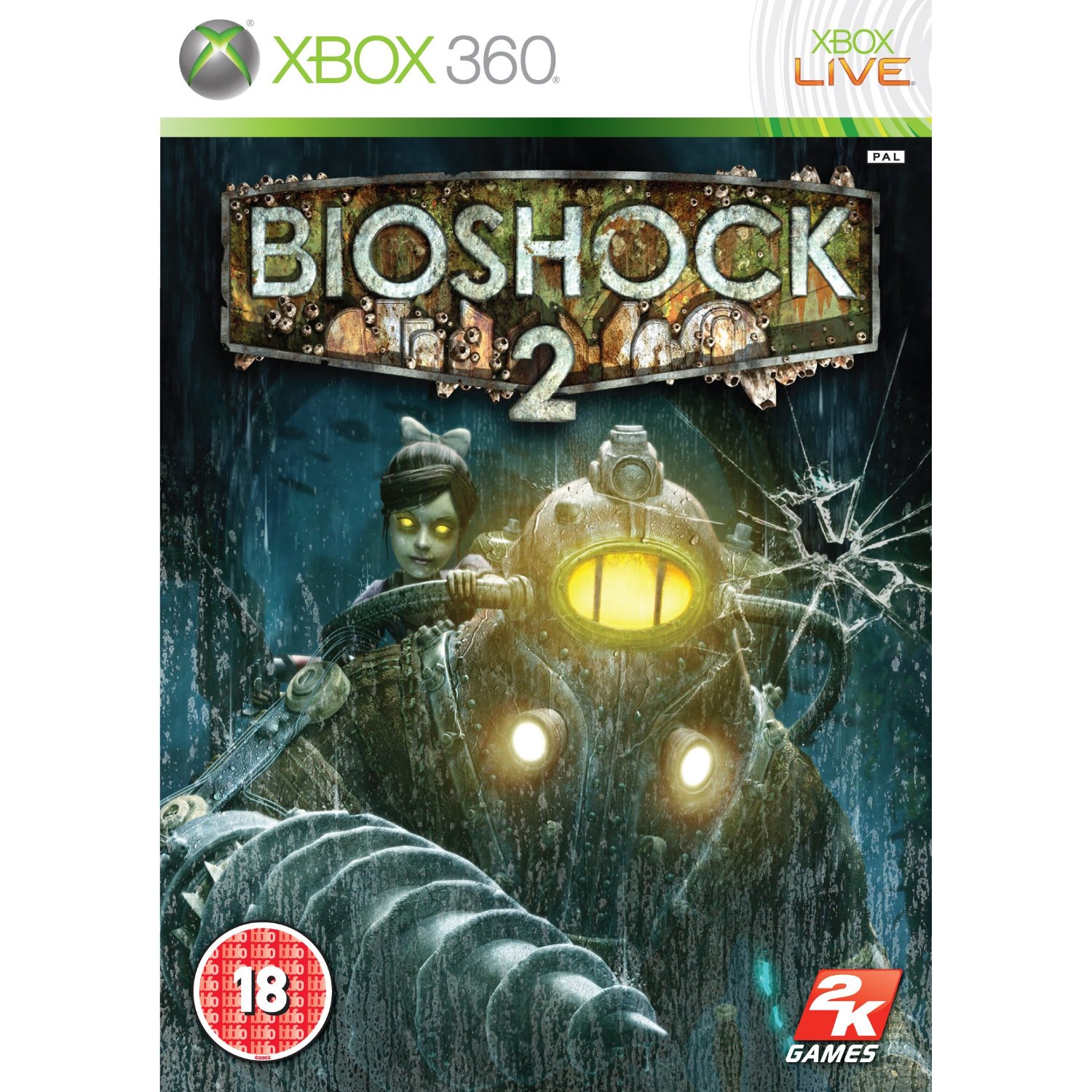
Bioshock 2

Scene of crime: Xbox 360/PS3/PC

Defendant: 2K Games

Case for the defence:

Eight years after the events of the first game and Rapture is just as deadly a place to visit. Jack Ryan from the first Bioshock is gone, now you are one of the giants – and instantly recognisable image of the game – a Big Daddy. Formerly the only man to have discovered Rapture by himself, as Subject Delta you are a unique Big Daddy, the first to successfully bond with a Little Sister.

That Little Sister – the small girls who harvest ADAM, a genetic-altering material that powers your Plasmid superpowers – happened to be Eleanor Lamb, daughter of Dr Sophia Lamb and the ruler of underwater dystopia Rapture since the fall of Andrew Ryan. Gone is Ryan's devotion to the individual and Ayn Rand, in is the community and Family of Dr Lamb.

While Ryan may be gone, but the Splicers – insane, genetically enhanced, humans – haven't. They've evolved, as have Big Daddies, who have had weapons and other upgrades, making Rapture a tougher place than the first visit, although hacking into machines is easier.

The story itself starts in 1958 with your suicide under hypnosis, only for you to reawaken a decade later in Rapture to hunt for Eleanor and to put a stop to Dr Lamb kidnapping girls from the mainland to become new little sisters.


Witness statements:


"BioShock is a hard act to follow, but this sequel is definitely a worthy successor to what is regarded as one of the decade's best, smartest games. In a lot of ways it's even better than its predecessor. It's a more competent shooter, with vastly improved AI and a more varied palette of weapons and Plasmids. The story is tighter and more focused, offering a number of challenging moral junction points, and the options for tactical play are much broader." - Andrew Kelly, PSM3

"One thing BioShock 2 does brilliantly where the original game floundered is in creating a feeling of progression and consequence to your actions. BioShock 2 constantly chucks moral decisions at you (and not just whether you should off the Little Sisters or not) and through character dialogue and the odd painful flashback it's clear what kind of path your character is treading; good, bad or somewhere in the middle, ultimately culminating in one of many different endings.

This result is a single-player game that, on paper at least, is superior to its 2007 predecessor - in level design, pacing and combat. The one thing it doesn't do though - just as we expected - is recreate those 'wow' moments from our first title's trip underwater." – Andy Robinson, Computer and Videogames

Findings:

A good story suspends belief. That's what they taught us at the Academy and if there's a case file for this, it's the original Bioshock. There those creeps at 2K they came up with a 1950s world of genetically modified humans with superpowers that was believable, and you learnt how they did this not through cut scenes and dialogue but through revelation and self-discovery at key points. I liked that, it got a Justice Department Seal of Approval and we gave permission for a sequel.

The first Bioshock (and Halo for that matter)  had a strong story and you know what else it had – a strong theme, it was about survival, it had a pinch to make you more involved, and a twist to make the story even more dramatic. This then set up a big, final confrontation that didn't disappoint and rought back memories of my days as a street judge. Some of my fellow Judges knocked it for slipping in an escort mission but in terms of storytelling my Scriptomatic Gauge hit full and the writers got a reward.

Bioshock 2, on the other hand, while not a bad story, lacks these key points. Despite knowing them for Bioshock 1, the sequel has no pinch or a dramatic showdown. Most worryingly, by the final parts of the game you can kick back and go off duty - you can have an inactive protagonist. They do this by encouraging you to use this to summon an invincible super soldier type to fight for you. I am a Judge, we don't let vigilantes and citizens do our fighting nor should we in training simulators like Bioshock 2.

Finally, the plot is confusing and I had to refer to notes from other investigating Judges to work out what was happening in terms of the story and by the end I did not care all that much.

I know, what was the story to Zelda, Mario or Great Giana Sisters? Not that much, but things have changed. Bioshock is partly sold on the strength of its story, as seen in Andrew Robinson's witness statement. It still gets things right – the antagonist is someone who believes they are acting for the best of intentions, a type I find tougher to battle than a simple 'a mad criminal'. Likewise Rapture is a dystopia but as Isaac Asimov once said, a dystopia that has the single note of 'aren't things bad' gets staler than a synthi-donut pretty quickly. In addition, the Ryan theme park adds a touch of dark humour to anyone who's been on a Disney ride.

It doesn't disappoint but it doesn't live up to the first game.

Verdict & sentence:

2K Games, you have not done badly. But on the other hand you're not completely innocent of crimes. And don't give me the "sequels aren't equals" crap – take a look at Grand Theft Auto and Call of Duty.

However, your crimes did not stop enjoyment of the game, but are crimes nevertheless and must be punished. The most suitable punishment in your case is a fine – a million creds. Case dismissed.

Wednesday, 1 September 2010

Mad Men Exhibit F – Waldorf Stories

Scene of crime: AMC (US)

Defendant: Writers Brett Johnson and Matthew Weiner

Case for the defence:

It's awards time and SCDP is up for the advertising industry's Clio – and Peggy claims it's for her idea yet Don gets the credit. Instead of thanking her – and gratitude is something Don's bad at as we later see - he scolds her and makes her work the weekend with a 'lazy and ideas free' sexist art director who waxes lyrical about the joys of nudism.

Some old faces appear at the Clios – self-styled rival Tom, Duck Philips, sailing on neat gin with an embarrassing drunken interruption to the ceremony, and Ken Cosgrove whose client suggests will be working with SCDP very soon. This sets Pete on edge, petulantly asking Lane if a merger was ahead – there isn't, but worse for Pete, Ken may be joining. Pete never liked Ken and his 'easy success', so there's no way Pete wants him there. However, just because he doesn't want it doesn't mean it may not be best for SCDP.

Recruitment and getting into ad land runs through this episode. Getting that break– we see a flashback to how Roger gave Don a job (or did he? Drink was involved) while in the present one of Roger's wife's cousins is trying to land a job. All he has are hack lines and a tenuous connection to Roger.

The other major theme in this episode is that of drink, and saving face the morning (or two mornings) after. Don stole the cousin's pitch, Roger gave Don a job when told that he had said so while drunk.

It's an office-life focused episode, and all the stronger because of it.


Witness statements:

"This week’s episode of Mad Men gives the idiom an origin story while providing illustrations of how careers get made as much through hard work and persistence as raw talent. And how people who don’t remember that could lose what they’ve got. Aspiration may not be as good as perspiration, but either one beats coasting." - Keith Phipps, The AV Club

"I don’t know what to do with the information that Roger hired Don to come work at Sterling Cooper because he was drunk at lunch one day and Don was being a pest. What did this shed light on? Roger’s lucky that Don turned out to be a spectacular creative genius? Both of the men have drinking problems? Don didn’t really work his way into anything, he just knows how to work a drunk man? His line about wanting to become a big manly man working in a manly man’s office was adorable, though. Hamm laid on the good-boy charm thick, and that part I enjoyed. Mad Men: Flashbacks are not for you." - Michelle Stark, The Daily Loaf

"Lane, Peggy and Pete - and soon Ken - represent the new order, and they'd be very at home in 2010. They're (mostly) moralistic and bottom-line-oriented, unattractive qualities in anyone. Peggy, exiled to develop a Vick's campaign with sexist-cliche-spouting art director Stan Rizzo, calls his sexist bluff by daring him to strip as she does. It's kind of a stupid scene, actually, and we won't dwell on it." – Kyrie, The Houston Chronicle

Findings:

Drink does strange things and that's why we banned it in Mega City. Mad Men reminds us all why – Don used it to weasel the job that launched his career and it's to blame for him hiring a man he clearly doesn't want. It's also the reason he lets down his kids for the first time, and for making a fool of himself with Dr Faye. Washed up Duck Philips is a warning of where he could end up and some good foreshadowing of mixing drink with work. It also made me realise that for all the drinking done on Mad Men, we rarely see the consequences, other than with Freddy Rumsen. Other than a long stretch in the isolation cubes of course.

The acting rated highly on my Acting Detector – Don played three versions of himself, as literally wide-eyed (a little too wide-eyed if you ask me) 50s go-getter, stern creative director, and drunk. We saw Joan in love with Roger and as an old friend. Peggy got naked, but as a Judge I'm not surprised but what citizens get up to. It's Pete who I have under surveillance as it is hard to tell how he'll react and that makes him dangerous. If he was under my jurisdiction I would have hauled him in for analysis and perhaps a protective lobotomy to keep him on track.

Don Draper also needs some protection for his own good, a spell in the isolation cubes would do him a service. I don't approve of a man who livers on a false identity as it's a crime, but he has at least been consistent so far. That he told a waitress – and not up to his usual standard going by Hot-or-Not gauge – his name's Dick is major flaw. If he was a Wally Squad member (*Tharg note – undercover Judge) he would have been dead long ago.

Drink lets people get you over a barrel – Don had Roger, cousin Danny had Don. Peggy got the art director over a barrel by calling his bluff but at least no drink was involved there. And Peggy was the only one without regrets because of this.

Don kissed Joan and I hope this doesn't lead to a new affair and more regrets. My instinct is nothing will come in Don's current shape, as a washed up exec at his nadir, but he's not at Duck Phillip levels just yet. There is still more evidence to consider.

Verdict & sentence:

Performances varied in portrayal but not in the acting and despite what Witness Kyrie claims, flashbacks do work well in Mad Men, and work better on this programme than on any other.

Dr Faye and Joan to remain observation, Pete to be brought in for interrogation.

Brett Johnson and Matthew Weiner, you are acquitted.